Sunday, October 28, 2007

My visit to New Mexico

This weekend I visited Rehoboth, New Mexico and the program for Education Students that Calvin has there. I had a wonderful time. The program is great and the students who go there get the experience of working in an environment that is quite different from Western Michigan in both the natural surroundings but also in culture.

I visited with the students and with Ron and Judy Sjoerdsma who are running the program this semester. I got to see my students involved at Rehoboth Christian School and also at two local public schools. I even got to go to TWO fall festivals – the one at Indian Hills School where our students were helping out was called a "spooktacular!"

Finally, on Saturday I got to visit the Acoma Pueblo. It was spectacular, as you can see from this picture. But I'm home safe and sound and excited about what our students get to experience on their New Mexico semester!

Saturday, October 20, 2007

Clapton – The Autobiography

I just finished reading Eric Clapton's autobiography and found it to be a fascinating and powerful story. I recommend it to anyone who has enjoyed his music over the years and in reading it you really get a sense of Clapton's voice. This feels almost more like he is sitting in the room telling his story – the writing is very conversational and clear.

Generally, I felt that it was too short. Cream, for example, gets one chapter and there is so much more to say about those days that I'd like to hear some of the other stories. But in fairness, this book is really in many ways the story of Clapton's slide into drug addiction and alcoholism and his recovery. That is clearly the story he wants to tell because he considers that primary. His secondary story, it seems, is that he now, after 20 years of sobriety, has sorted out the mess he made of his life and has a young wife and a family who he dearly loves. In fact, the last part of the book may actually be a little long as he celebrates how ordinary his life has become. It's hard to begrudge him spending those pages on his happy days, especially after being so candid about his failings early on in the book.

I wish there had been a bit more about the making of the music but then again I almost always say that about first person accounts by musicians. The making of music is hard to talk about and who played what and why is incredibly boring for all but a few of us music nerds so I can see that those things are toned down in books like this. And, frankly, his life was about a lot more than recording albums, even though that is the only part I got to see before this.

It is interesting to me, not having known the story of his addiction and alcoholism well before this, that the point at which he got sober matches well with the point at which I think his playing improved. I consider Journeyman to be a turning point album for him (and I did at the time too) and it turns out that this is soon after he stopped drinking. In fact, his recorded output has been quite strong from that point on. Not surprising.

So overall, this is a fine book, one that I'm sure I'll enjoy picking up again and reading certain passages from, especially when I'm listening to his music for a certain era.

Wednesday, October 17, 2007

Reformed Worship | Faking It

Here is an excellent article that my daughter Bethany wrote and published in Reformed Worship. It was actually published a little while ago but just now got online.

Laura and I have a series of articles on Faith Formation in Worship that began in issue #85 (the issue after the one with Bethany's article) and will run for four issues. We just turned in the third article.

Speaking of Bethany, her "Blog" of "Unnecessary" Quotation Marks continues to gain popularity and is more frequently getting mentioned in both the internet and mainstream press. If you haven't been there yet you should go visit.

Tuesday, October 16, 2007

Producer David Kahn talks about memory Almost Full

Here is a wonderful interview with Paul McCartney's producer David Kahn about the making of Memory Almost Full. I've written before about how much I like this album and it's fun to get a little more inside info.

Saturday, October 13, 2007

24 Season One – not so sure about Nina

Warning: in case you haven't watched Season One of 24 yet, there are spoilers in this review.

I'm watching the first season of 24 again. It's been a little over a year since I got the DVDs for the first season and I'm really enjoying watching them again. One of the things that is fun, of course, is knowing what's going to happen and then seeing if there are any hints along the way that, had I been smart enough the first time through, could have lead me to guess what might happen. The big surprise at the end of season one is that Nina, who is seen as Jack's primary confidant, turns out to be a traitor. So, I thought to myself, were there hints of this earlier in the season?

I come to the conclusion that there are absolutely no hints about this until possibly the end of episode 21 – and even then it is just maybe a look in her eye. This is the point at which I think we have the very first bad thing that goes on where Nina might be complicit – how else would the bad guys know that Kim is on her way back to CTU in the police car unless someone in CIT told them?

Earlier there had been the hit on the safe house in something like episode 15 which may or may not have been set up by Nina. I don't think it was - at least I don't think the writers knew it at the time becasue she was there helping Teri and Kim. She left the house because Teri got weird about Nina's relationship with Jack, not because she knew a hit was coming. It could be argued that she used Teri's weirdness as a convenient excuse to get out of there but I really think the writers just wanted her out of there to keep her safe and put Teri and Kim in danger. I don't think they decided that Nina was a traitor until near the end of the season.

OK, 24 watchers – what do you think? What did I miss?

Saturday, October 06, 2007

A Beatles Bike Ride

Today I took a bike ride around Holland and realized that it was the perfect ride for Beatles fans. I nearly rode on Harrison St, then I actually did ride on Blue Jay (although there was no fog.) But things really became very Beatle-y for me when I passed Pony Lane (which was in both my ears and my eyes.) As I was passing Pony Lane, my iPod (which was set on shuffle) started playing "We Can Work it Out." It was almost perfect.

Friday, October 05, 2007

The story of the US versions of Beatles albums – part two

(read this first)

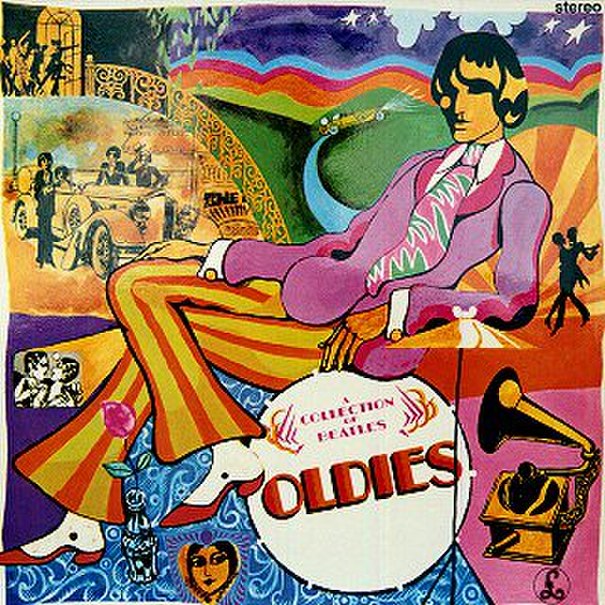
In 1966, after the Beatles played their last concert at Candlestick Park in San Francisco they took a little time off and then dove back into the studio to work on their next album, what was meant to be an album of reflections on their childhood. They took a long time to record this album – not by modern standards but by their previous standards. They had churned out two albums and four singles a year for a while and now, spending this much time on one album made their fans, the press and others wonder if they had "lost it." In fact, it took so long that when Christmas came around with no new Beatles album to sell, Parlophone put out a collection of the songs that had been on singles but not on albums. That collection was called A Collection of Beatles Oldies (but Goldies). There is no comparable US album because these songs had all appeared on the various US albums already.

But the world wanted new Beatles music too so their manager persuaded them to take two of the songs from their forthcoming album and release them as a single – one by Lennon ("Strawberry Fields Forever") and one by McCartney ("Penny Lane") – in both the UK and the US. This single accomplished two things. It showed they still "had it" and it effectively took the heart out of their forthcoming album of songs about their childhood. So they refocused their energy, used a wacky idea of McCartney's of pretending to be another band and finally finished the new album - Sgt Pepper's Lonely Hearts Club Band. It was obvious, even to the business folk at US Capitol Records, that they couldn't carve up this album, subtract songs or mess with it in any way so the US and UK versions of this album are practically identical. (I've never seen this in print anywhere but I'm not convinced that the US version had the run-out groove that we now hear at the end of the CD version of this album. I'd love to hear from someone who bought it in the US and had it on theirs – I'm pretty sure mine didn't.)

The Beatles actually didn't record another album next. They did a few singles ("Hello Goodbye," and "All You Need is Love") and made a film, Magical Mystery Tour, and recorded songs for that film. Those songs, the soundtrack to the album, were released in the UK as a double EP – two 7" singles packaged together with three songs on each disc. The US company knew that the American buyers didn't know much about EPs – they had never really taken off here in the US – and took those six MMT songs, combined them with the recent singles and made an album which they also called Magical Mystery Tour. This is the one case where this idea made so much sense (both musically and economically) that the UK eventually followed suit and released it in this form too – that's why you can get a CD like that.

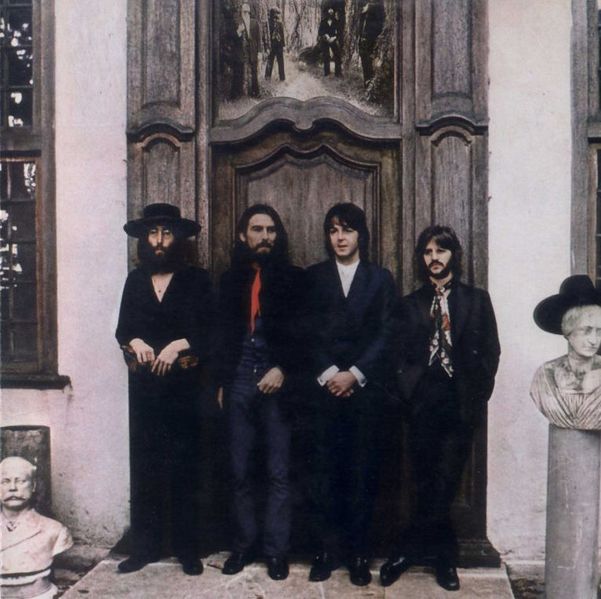
The Beatles continued to release both albums and singles in the UK and the US but by this time the pattern was well established and they were the same on both sides of the Atalantic – with one exception. In 1969, between the release of Abbey Road and Let it Be, the US got antsy for more new stuff to sell and gathered the singles that had not been released up to that point including "Hey Jude," "Revolution," "The Ballad of John and Yoko," and even "I Should Have Known Better" from 1964 which hadn't been on a US album yet, and put out another album with no title on the cover. The first edition (which I still have) had the name Hey Jude on the spine of the record sleeve but it had The Beatles Again printed on the album itself. Later pressings were just called Hey Jude.

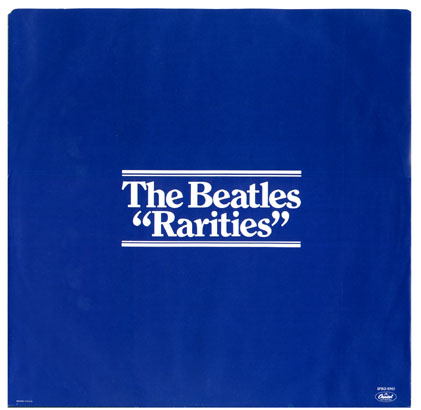
After Let It Be, the Beatles final album, was released in the US and UK, Parlophone released an album called Rarities, which collected b-sides, songs that had only been on EPs in the UK (like "Matchbox") and things like "Bad Boy" which had been recorded specifically with a US audience in mind and released on Beatles '65 but never released in the UK. Since the US had already released all these things on the albums there was no comparable US release – except they, too, made an album of Rarities which had a few alternate takes, mono mixes, one or two songs that actually didn't get on US albums (like "Misery.") It, as well as a 1977 release of The Beatles Live at the Hollywood Bowl, has never been released on CD.

So, there it is. If you buy the CDs you'll find the UK albums as well as two collections called Past Masters Vols 1 and 2 which contain all the tracks that aren't on the UK albums – things like the singles, b-sides, EPs and other things. Other collections (Like 1 and Love) have been identical around the world. So, Kathy, does that answer your question? :)

Thursday, October 04, 2007

The story of the U.S. versions of the Beatles albums

I got an email from my friend Kathy this week that said this:

"The Tunas played 'I'll Be Back' the other night, and I had a hankering to listen to it. I went through our Beatles (British) CD's and couldn't find it. It's possible I missed it, and it's definite that I grew up on the American albums and cannot identify which British album it's from. (Beatles VI?)

Pete and I were discussing this over dinner, and he said - Why don't you call Bob; he'll have the answer, he'll enjoy giving it, and you'll enjoy hearing it.

All true, except that I didn't call you.

Now we're wondering if
perhaps you'd like to blog about the concept of American vs. British sequencing."

Everything Pete said was true – this is just the kind of trivial knowledge I love to share. So I figured I could either share it with my family and watch them roll their eyes or invent meetings that they suddenly remembered or I can write about this. So, here I am. This confusion never existed back in the days of vinyl records because all we had were the U.S. albums. Things became more complicated for us in the States when the CDs came out, wisely issued in their original UK configurations, the way the Beatles intended them. But for those of you who, like me, bought albums that weren't available on CD (until the fairly recent Capitol Albums collections) back in the 60's, here is a primer.

Back in the early days of the Beatles, they recorded their albums and singles on the Parlophone label, a division of EMI. Notice that I said albums and singles. Back then the singles were separate from the albums so if you just bought the albums you missed the big hits. The idea was that British teens wouldn't spend their money on albums if they already had all the best songs on singles. This was back in the days of rock and roll when singles were king and artists would quickly knock out enough songs to fill out an album. The Beatles didn't do that. Their albums are legendary and they didn't include their amazing singles. Songs that were just on singles in the UK are many of the ones you know and love; "She Loves You," "I Want to Hold Your Hand," "I Feel Fine" and even later ones like "Hey Jude" and "Penny Lane."

So the Beatles recorded their first three singles on Parlophone and pretty quickly had hits in England helped, in part, by the fact that their manager, Brian Epstein, owned a record store in Liverpool. There is talk that he bought enough copies of "Love Me Do," their first single, to at least get it on the charts. Whether that really happened or not isn't clear. What is clear, though, is that Capitol Records in the U.S. wasn't interested in releasing the Beatles records, even though they were also owned by EMI. They had first refusal and, when they did, the records were shopped around to small independent labels like VJ and Swan. (This is a picture of the Swan version of the "She Loves You" single.)

When the Beatles made their first album, Please Please Me (a rare case in which the smash single was included on the album) Capitol refused that as well so an album with many of those songs was released on VJ Records in the U.S. making almost no splash over on this side of the Atlantic. I say "many of the songs" because the U.S. was accustomed to shorter albums with only 12 songs and the British albums had 14 songs. So the Beatles continued to release singles and put out a couple of huge hits in England, "She Loves You," which, unbelievably, the U.S. Capitol still refused to put out, and "I Want To Hold Your Hand," which was such a hit in the UK that Capitol finally gave in an released it. The American response to that song was overwhelming.

Once the American flood gates opened the rush of Beatles material in the U.S was amazing because by the time they came to the U.S. they had released their second UK album – another 14 songs worth. So when Capitol released the "first" Beatles album in the U.S. (Meet the Beatles) they used mostly songs (and the cover photo) from the Beatles second UK album. They used a few songs from their first album (like "I Saw Her Standing There") plus the hit U.S. single "I Want to Hold Your Hand" and made an album out of it. So there were well over 30 Beatles songs to choose from and Capitol selected 12 to put on their first album. This meant that their was plenty of "new" material for their second U.S. album called The Beatles' Second Album, to be released almost immediately. It sold on the strength of their second big U.S. single, "She Loves You," which was actually recorded and released before "I Want to Hold Your Hand" in England.

So by this time the connection between US and UK albums was mostly gone. And the Beatles were churning stuff out at such a prodigious rate that Capitol had a hard time finding a way to include the stuff from their first album on subsequent releases. Finally they released an album called The Early Beatles which took care of most (but not all) of the first UK album stuff that they had missed. To complicate things the songs in the movie A Hard Day's Night were licensed to United Artists so there was a soundtrack album for the movie from one US company, and a new album called Something New From the Beatles from another company (Capitol) neither of which matched the UK album A Hard Days' Night but which had some of the same songs. By the way, this is the album that includes the song "I'll be Back" which Kathy asked about in her letter.

So Capitol was playing mix and match with Beatles songs and albums and, along the way, even missing a few songs completely. "I Should Have Known Better," a song from 1964's A Hard Day's Night, never got on a U.S. Beatles album until 1970! This mash-up of album tracks and singles kept up with a few US albums having no clear UK counterpart. This gives us albums like Beatles '65 and Beatles VI which kind of straddle the UK albums Beatles for Sale and Help. (although, just to confuse things, there was a US version of Help with only the songs from the movie plus orchestrated soundtrack stuff while the UK version of Help had additional songs.)

Then Capitol at least started making albums that were similar – the US and UK versions of Rubber Soul and Revolver are close to being the same but are not identical with songs from the UK Help on the US Rubber Soul, songs missing on the US versions of both. There were almost enough songs left over that a whole new US album called Yesterday and Today was released which picked up the tracks that hadn't been used elsewhere. In an amazing move the U.S. actually grabbed a couple of tracks from the UK version of Revolver that hadn't been released yet to include on Yesterday and Today.

So, by the end of 1966, when the Beatles took a break from touring and cloistered themselves in the studio to make Sgt Pepper all of their US and UK albums had only a passing similarity. Of course, those of us who were teens in the US had no idea that any of this was going on. We just happily shelled out our money and wore the grooves down on our records.

This is enough for now. I'll finish the story in another post. EDIT: The story is continued here.

Friday, September 28, 2007

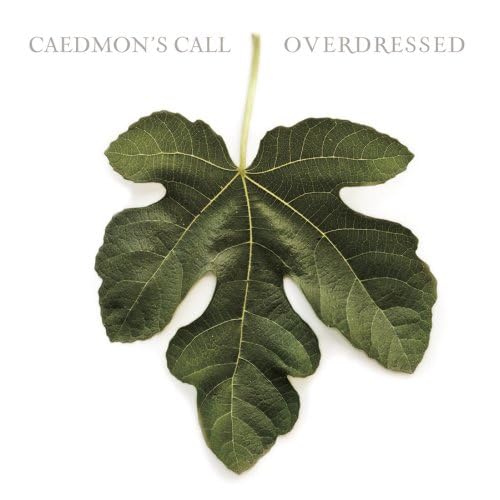
Caedmon’s Call – Overdressed

When I heard that Derek Webb was returning to Caedmon's Call (for at least one album and a tour) I was pleased. I thought that Derek benefitted from being in the band (although his solo work has been very good) and Caedmon's was better when Derek was there. So I wasn't really surprised when Overdressed, the new Caedmon's album was excellent. What did surprise me, though, is how strong all the members of the band are on this album, especially Andrew Osenga. With strong vocals, arrangements and writing, Overdressed is the best CC album since 2000's Long Line of Leavers.

Even though I came into this album excited to hear Derek's songs it is the two songs that feature Andy Osenga, "Expectations" and "Hold the Light," that really caught my ear. "Hold the Light," sounds like a really good track from the Normals (Andrew's previous band) and "Expectations" sounds like nothing Caedmon's Call has done before. That's not true of the entire album. Caedmon's wisely went back to their acoustic-based sound that they first honed on their independent albums and their first self-titled national release. And while there are sonic diversions, many of the songs, especially those sung by Cliff Young, tend to be right down the middle of the strike zone for fans of the traditional Caedmon's sound, which is both good and bad. It's good to hear what one expects from a Caedmon's Call album but it's also good to be surprised. This album has a nice dose of both. I especially enjoy hearing more of Danielle Young on this album than I did on earlier ones. She seems to take the vocal spotlight more often – or maybe she's just doing it better. "Sacred," a song she sings about how even our daily housework is done for God, is well written and well delivered. This album has many highlights, however, and only a few songs I merely like. I should note that the writing by Webb and Osenga along with Randall Goodgame and Sandra McCracken is especially strong on this album. If, like me, you thought that Caedmon's Call's best days were behind them and that perhaps they were fading away, this album will renew your enthusiasm for what is arguably one of the best bands to come out of the Christian Music industry.

Wednesday, September 26, 2007

More people saying nice things about my book

These are probably the final two endorsements for my book, Helping Our Children Grow in Faith. It has been wonderful to read what others who I respect as professionals in the field have written about it. The book goes to the printer soon and I'll probably have a copy in my hands some time in December.


“Though this book includes lots of specific ‘we could do that’ ideas, it is mainly a sweeping vision book. I’d buy it for a parent or committee member who is new to children’s ministry or for one who has ‘done it all’ and needs to remember what it’s all about.”

—Carolyn Brown, children's ministry consultant and author

“Robert Keeley masterfully describes some of the best current ideas for nurturing children’s spiritual development—intentional intergenerationality, the significance of story, the role of wonder—and illustrates them with colorful family stories and incisive vignettes from a variety of church settings. Along the way, Keeley integrates biblical insights as well as key principles from Piaget, Kohlberg, and Fowler in engaging, understandable language. The book closes with a delightful bonus---an appendix of picture books Keeley recommends for fostering spirituality in children.”

--Holly Allen, Associate Professor of Christian Ministries and Director of Children and Family Ministries, John Brown University

Saturday, September 22, 2007

Internet Notoriety

My daughter Bethany is apparently spending her fifteen minutes of fame on punctuation. Her "blog" of "unnecessary" quotation marks got picked as a Yahoo Pick of the day and then written about by the Associated Press and her blog got 18,000 hits on the day the story got posted.

The story got posted on line by the New York Times, the Washington Post and lots of other newspapers around the country.

I think she did a radio interview for an L.A. radio station too. Pretty cool.

Saturday, September 15, 2007

Two more endorsements

In addition to the ones I posted earlier, this week I received two more endorsements for my forthcoming book, Helping Our Children Grow in Faith.


“Helping Our Children Grow in Faith
offers a thoughtful, accessible, and practical introduction to the basic building blocks of effective ministries with children. Robert J. Keeley takes seriously children and their spiritual development, challenging congregations to move beyond simplistic approaches that don’t fully engage children. In the process, he invites leaders to transform congregations to become communities where children are included, loved, valued, and nurtured by a whole community of caring Christians.”

Eugene C. Roehlkepartain, Co-Director
Center for Spiritual Development in Childhood and Adolescence
Search Institute, Minneapolis, Minnesota

“Biblical,” “practical,” and “scholarly” are one way to describe Bob Keeley’s book. “Warm, “gentle,” and “encouraging” are another set of descriptors. Helping Our Children Grow in Faith weaves personal experience with scholarly research and biblical perspectives in offering pastors, parents, and church educators practical wisdom while gently challenging them to consider new ways to offer children a rich, vibrant faith. This would be an excellent study book for parents or a church’s Christian education committee.

George Brown, Jr.
G.W. and Eddie Haworth Professor of Christian Education & Associate Dean,
Western Theological Seminary, Holland, MI

Friday, September 14, 2007

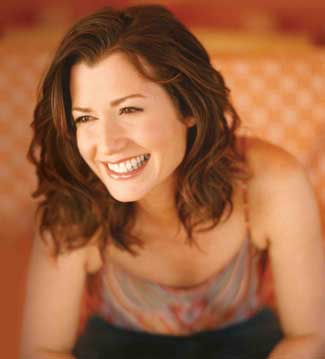
Amy Grant podcast


Back in the old days of Contemporary Christian Music Amy Grant was the big star. She had CCM's first million seller with Age to Age, she was the first to "cross over" to the mainstream with unguarded, and she made what many consider the best album of the genre with Lead Me On. As one who followed her career from the early days (I saw her first tour with a band) I enjoyed her music as she changed from someone who sang primarily to tracks produced for her when she wasn't there to a serious artist who took control of her albums.

Frankly, I don't listen to a whole lot of Amy Grant any more (except at Christmas) and some of her albums sound quite dated. But I have fond memories of almost all of them. So when she produced this podast to celebrate the re-release of her catalog I subscribed to get it. And I'm really glad I did. This podcast is wonderful. Each segment (so far there are five) is a 20 minute talk about her albums, the writing and creating. it focuses on the music and not on People magazine type stuff. It's great. If you listened to Amy's music in the past subscribe to this *free* podcast. By the way, her recent live album, Time Again, is also a nice retrospective of her career done with a great band and updated sound.

Wednesday, September 12, 2007

You say Goodbye...


It seems that Paul McCartney has been seeing a bit of Renee Zellweger lately, at least according to The Daily Star. Now normally I don't comment on such things because, well, you know... who cares? But in this case I will make an exception because I find the following line irresistable: Do you think she said "you had me at hello, goodbye?"

Saturday, September 08, 2007

Endorsements for my forthcoming book

Here are what some folks have written about Helping Our Children Grow in Faith (which will be available in January from Baker Books):

"I loved this book! Robert Keeley points us in the right direction for building a ministry strategy with children. It is a delight to find someone with a clear vision of how the entire life of the church needs to be developed if we want our children to have a healthy, growing faith in Jesus Christ. This is a 'must read' for every children's pastor and lay leader who cares about the spiritual nurture of children."

Kevin E. Lawson,
Director of Ph.D. and Ed.D. programs in Educational Studies
Talbot School of Theology
Editor, Christian Education Journal.

“Robert Keeley provides local church leaders with an accessible resource to guide reflection on their ministry with children. Two very important themes weave through the book, the role of the biblical story and the role of the faith community in the "three dimensional" faith formation of children.; the forming of "a faith that affects their head, their heart, and their spirit." Dr. Keeley challenges readers to see Bible stories as more than "moral tales' and discusses how to allow children to discover in those stories who God is and the relationship they can have with our great and loving God. Drawing on his rich experience as a Children's Ministry Director, Dr. Keeley offers practical suggestions for welcoming children into the faith community as authentic participants. He envisions church as a "child friendly culture," an environment healthy for the spiritual growth of children. And he points the way to forming such a community.”

Dr. Catherine Stonehouse
Asbury Theological Seminary
Dean of the School of Practical Theology
Orlean Bullard Beeson Professor of Christian Discipleship
Author of Joining Children on their Spiritual Journey

“Christians love their children deeply and are concerned for their growth, especially their growth in faith. For that reason Robert Keeley gifts us with a delightful, helpful, and accessible book for parents and children's ministry leaders. "Helping Our Children Grow in Faith" is an excellent resource for shoring up children's growth in faith. It also is an entry point for exploring the burgeoning field of resources becoming available that address the faith and spiritual life of children.

Writing from a reformed tradition, he rightly posits the faith of a child as coming from God, and it is the Holy Spirit that begins that work. But the community of faith and the parents are to help build the child's faith. Here is where this book shines.

Structured around six key principles, this book is loaded with stories and examples of how to implement them. For example, because Keeley feels that a church that mentors children may have a greater impact than a church with dynamic programs, he describes how mentoring might take place. His chapter on story is insightful. He also has the courage to go against the popular trend of separating children from adults for worship. He says that children need both--a time to worship with adults and time for worship intended for their own age.”

Scottie May
Dept. of Christian Formation and Ministry
Wheaton College
Co-author of Children Matter: Celebrating their Place in the Church, Family and Community

"Helping our children grow in faith is an engaging look at the opportunities and challenges of nurturing children's faith. Prof. Keeley's clear explanation of faith nurture, and thoughtful examination of the role of parents and congregations in the process is a refreshing invitation for the church to re-prioritize its children's ministry."

Darwin Glassford
Assoc. Professor of Church Education
Director of M.A. Programs
Calvin Theological Seminary

"Keeley has done us all a great service and made very insightful material available. I've always wanted our children to grow in faith and I've worked hard at it. But now I understand better how it happens, what it takes, and how one stage is different from another. Growing their faith won't happen without growing a church in which they can grow. This book will take you inside the church by taking you inside the process of forming a child's faith!"

Howard Vanderwell
Resource Development Specialist
Calvin Institute of Christian Worship
Co-author of Designing Worship Together

"Bob Keeley combines biblical grounding, educational research, and much experience to create this down-to-earth guide. Readers will find here not only practical advice but also a wise proposal about changing our congregational cultures in ways that benefit young and old. Above all, readers will be inspired by the deep love and respect for children shining through this book."

Debra Rienstra
Associate Professor of English
Calvin College
Author of So Much More: An Invitation to Christian Spirituality

Friday, September 07, 2007

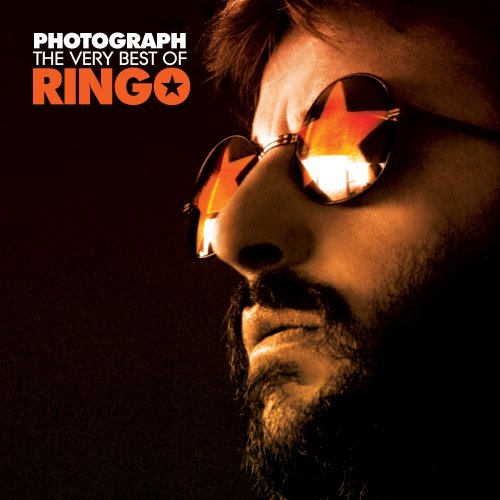
Photograph: the very best of Ringo Starr

This has been a good season for Beatles fans. It started when Paul McCartney released one of his best solo albums with Memory Almost Full. But then it continued with an excellent re-release of the complete Traveling WIlburys catalog in a wonderful two-disc set showing that at the end of his career George Harrison still had some good tricks left in him. Then there was the Instant Karma collection with the solo catalog of John Lennon covered by a wide variety of modern artists. Tribute albums are not always successful but this collection reminded me of what a fine writer Lennon was and encouraged me to look back at his recordings again in the excellent Working Class Hero collection (newly available on iTunes.) And finally, and for me surprisingly fun, the best of Ringo Starr. These albums have all served to remind me that the Beatles were indeed something special and that there solo work also stands up well.

What surprised me most about the Ringo collection is that I find myself singing along with so many of the songs. It's not that I know them (although in most cases I did) but the type of songs they are just ask to be sung along with. "The No No Song," for example has that catchy chorus that I find irresistible. The same is true for "It Don't Come Easy," "I'm the Greatest," "Back off Boogaloo," "You're Sixteen," and the title track, "Photograph." Many reviewers have noted that Ringo actually outsold all the other former Beatles for a brief period and it's easy to see why – his friendly personality brought out the best in his collaborators. It's like they really wanted to do something good for Ringo and his clear limits as a vocalist and writer were used to his advantage.

This is not an album that I'm going to lift up as the finest example of pop music over the last forty years but it is an album that I'm going to continue to put on and that I'll probably find myself in the car singing along with at the top of my voice.

And to top it all off, it seems that we can stop worrying because Help! Is on the way!

Saturday, August 25, 2007

Too much new music?

I've had a great summer from a music appreciation standpoint. I went back in my collection and pulled out a couple of old albums that I haven't listened to in a while and, just over the last month, I've picked up way too may new recordings. Part of this is because things I've ordered in the mail came at about the same time and part of it is that Best Buy has had some good stuff for $7.99 lately. I've also been intrigued by some new artists and I've taken a chance on them. I have also found that the Paste Magazine samplers and the iTunes free downloads of the week have made me aware of some artists that I would not have noticed. It's been fun.

I may write reviews of each of these albums in time but for right now, here is a list of what I've added to my iPod lately in no particular order.

Old albums I got out again:

  • Crimson and Blue – Phil Keaggy
  • Open Sky – Iona
  • Woven Cord - Iona
  • The Story of the Ghost – Phish
  • Farmhouse – Phish
  • Europe '72 – Grateful Dead
  • Good Feeling to Know – Poco
  • In My Father's House – Richie Furay
  • Working Class Hero – John Lennon (see my post about this.)
  • The Friendship and the Fear – Matt Redman
  • Wingspan – Paul McCartney and Wings
  • Coming to Life – The Normals


New albums:

  • The Fragile Army – the Polyphonic Spree
  • Under the Blacklight – Rilo Kiley
  • One Cell in the Sea – A Fine Frenzy
  • The Silence of Everything Yearned For – Ric Hordinski
  • The Trumpet Child – Over the Rhine
  • iTunes Festival London – Paul McCartney
  • Arrivals and Departures – the Icicles
  • Singularity – Mae
  • Letters from the Editor, Vol. 1 – Andrew Osenga


I've added all these (plus some Paste Samplers and free iTunes downloads) since July 13. All of the brand new music has come since July 29. So I have a lot to digest and I've been having a great time doing that. Plus, I continue to listen to things that I haven't listened to on my iTunes in the lat three months – they naturally come up in my playlist – and that often gives me a "hey, this is cool stuff" moment. Hopefully I'll give a full review of many of these at some point.

Friday, August 17, 2007

Bad exegesis

I often ask my students if they can think of examples of bad biblical exegesis* that they have heard and I sometimes get some good examples. Ben Witherington (professor at Asbury Theological Seminary) points us to a good one in his blog post about a pastor who asks his congregation to pray for his critics to die. See this article in the LA Times. Here is an excerpt:

Drake said Wednesday he was "simply doing what God told me to do" by targeting Americans United officials Joe Conn and Jeremy Leaming, whom he calls the "enemies of God."

"God says to pray imprecatory prayer against people who attack God's church," he said. "The Bible says that if anybody attacks God's people, David said this is what will happen to them. . . . Children will become orphans and wives will become widows."

Imprecatory prayers are alternately defined as praying for someone's misfortune, or an appeal to God for justice.

"Let his days be few; and let another take his office," the prayer reads. "Let his children be fatherless, and his wife a widow."
Make sure you read Witherington's response.

* "Exegesis" is determining what the original readers of a passage of scripture understood the passage to mean to them. "Hermeneutics" is applying that message to us today. Hermeneutics without good exegesis is problematic at best.

Desert Island Discs Part Nine - Paul McCartney's Memory Almost Full


I know it just came out but I'm going to add Paul McCartney's Memory Almost Full to my list. See my recent review here. I still like it and I still find new things in it. I almost picked Chaos and Creation or Flaming Pie but all this just goes to show that McCartney has been on a roll lately!

Since I just recently reviewed it I'll just let you read what I wrote there.

There are four friends joining me on my Desert Island journey. Check their lists:

My Complete Desert Island List (so far):

Wednesday, August 15, 2007

Working Class Hero

The release of the Instant Karma collection, which I reviewed here, got me thinking about Lennon's solo music and I continue to enjoy listening to what new artists have done to reinterpret Lennon's songs. With the release this week of Lennon's catalog on iTunes I noticed a best-of collection called Working Class Hero, the Definitive Lennon and, as I looked at it, I found myself thinking that this was a great collection of songs. Now I already have most of the Lennon stuff, having bought both the original boxed set, called Lennon, and the John Lennon's Anthology, which did for Lennon's solo music what The Beatles' Anthology did for the group's music – present out-takes and alternate versions along with a few unreleased gems. As I looked at Working Class Hero I realized that I had every one of the 38 songs on the collection so I made my own version of it using the discs I had and iTunes.

Listening to this collection a couple of times made me realize that this is, perhaps, the best way to listen to Lennon's solo music. First of all, this is a long collection, thirty-eight tracks, so there is a lot of music here. It takes more than two-and-a-half hours to listen to it all. Second, while a few of Lennon's albums are classics, most notably Plastic Ono Band and Imagine, the rest of his releases have quite a bit of stuff on them that is less than stellar. And I can only listen to Plastic Ono Band when I'm in a certain mood because that album is really intense. Plus, Lennon's singles were really good. "Give Peace a Chance," "Instant Karma," and "Happy Xmas" are among his best work and they don't live on any regular albums. That's why I enjoyed Shaved Fish, Lennon's first greatest hits collection, so much in the old album days.

All the expected songs are here. You'll be hard pressed (or at the very least a hard-core fan) to be able to name any significant song that has been left off. And this collection includes the Lennon-only demo of "Real Love" and, as an added bonus, the George Martin orchestrated version of "Grow Old With Me" closes out the album. I'm generally not a "greatest hits" kind of guy, preferring to think that albums are conceived and created as units and therefore ought to be listened to as such, but Working Class Hero is one case where pulling out the best songs works out really well.