Showing posts with label book reviews. Show all posts

Monday, July 27, 2009

Sustainable Youth Ministry


I’m just finishing Mark DeVries’ book Sustainable Youth Ministry and I like it a lot. I’ve not written as much about books here lately but I’ve been reading lots of books about faith formation in preparation for the book I’m editing this summer and fall on the topic. I hope to write a little about some of the other books I’ve read but I’m writing this today because I’m so enthusiastic about Mark’s book.

This book is an incredibly valuable resource for Youth Leaders but also for churches. It should be read by church staffs and volunteer church leaders too – anyone who connects with a church youth program would benefit from this book because Mark has seen what works and he’s seen what doesn’t work and he lays then out nicely in this book. It is written in his whimsical style (which is even better in person – he’s a great speaker) and there is a lot of practical wisdom in here that I really appreciated.

I hope to read this book with our church ministry staff and discuss it soon. I highly recommend it.

Friday, April 11, 2008

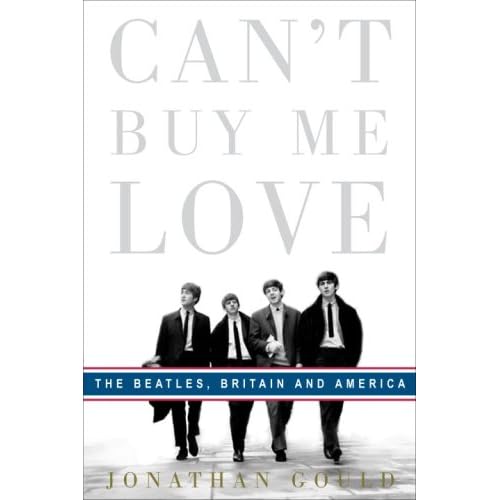
Can’t Buy Me Love by Jonathan Gould

I finally finished Can't Buy Me Love by Jonathan Gould. It took me a long time because a) it is a long book and b) I've been quite busy lately. In the prologue, Gould writes that this book is unique in that it combines "three main perspectives – the biographical, the musical and the historical – in an effort to convey the full import of the Beatles' lives art and times." (p. 12) Gould is looking to do all these things in one book, something he claims no other book on the Beatles does. He succeeds on nearly all counts.

As for the biographical, Gould's book is not quite the definitive biography that Bob Spitz' recent book is – and it couldn't be, especially since this book is not as long and covers things that Spitz never intended to. That said, I wonder if a novice could read this book and get a sense for the whole story. I'm not sure. It struck me, at times, that one had to know the story of the Beatles to really understand what was happening in the book. For me, that was a good thing – I don't need five pages explaining things at a level that someone who is culturally illiterate would need. I just found myself wondering if this book was written primarily for people like me who has seen, heard and read it all as far as the Beatles is concerned.

The historical part I found especially enlightening and learned things about the band and the things that were influencing them that I had not learned. The part of the book that is WAY over the top for novices are track by track discussions of nearly each and every song in the Beatles catalog. While the discussions are enlightening and interesting, the level of detail sometimes goes beyond being a fan to being something else entirely. On the other hand, I really dug thinking about the songs that way, and thought that the critique was especially interesting on the Beatles' top albums, Revolver, Sgt Pepper and Abbey Road.

So if you've read at least one other Beatles book I highly recommend this one. It's very very good.

Sunday, March 30, 2008

Reading / Listening / Watching – March 2008

It has been a while since I've posted so I thought I'd do an update of what I've been up to.

Reading

I'm a little past halfway through the brilliant new Beatles book Can't Buy Me Love by Jonathan Gould. I wrote about it before I started reading it and it is every bit as good as many of the reviews say it is. It does a great job of not only talking about the lives of the Beatles but it also puts that and their music in the context of the times and the political social and artistic changes that were happening in the world. On top of that there is a song by song discussion of each of their recordings. It really is special and, while it is a bit too in-depth to be anyone's first book about the Beatles, for someone like me who has read lots of books on the Beatles, I'm enjoying it immensely.

I have, for the past couple of years, participated in the Calvin Theological Seminary book of the quarter reading group and this quarter we're reading Elizabeth Strout's Abide With Me, a fascinating look at the life of a small town preacher who's wife's death has brought him, his young daughter and their community personal turmoil. It is only through allowing his church to see him broken and in need of help that he can once again effectively lead them. We'll get together three times to discuss the book, once with the author who is visiting Calvin for the Festival of Faith and Writing! It's a good book and I enjoyed it a lot.

Listening

Because I have tickets to the Switchfoot and the Police/Elvis Costello concerts coming up soon I've gotten back into their music lately and, while I've already expressed my love for Jon Foreman's EPs I have mostly lately listened to a lot of Elvis Costello and, I must say, that his gift for melody and for inventive song and chordal structure is really extraordinary. I have long thought "Couldn't Call it Unexpected" from Mighty Like a Rose was a prime example of this but I just lately came to love the album All This Useless Beauty. It is just packed with beautiful songs. And if you haven't heard For the Stars, his duet album with opera singer Anne-Sophie Von Otter, you're missing something truly special.

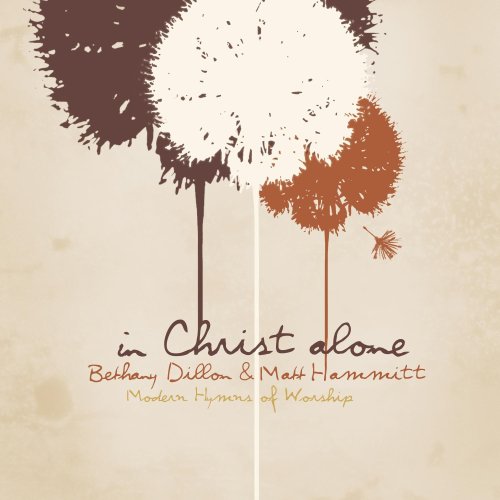
I have also enjoyed Bethany Dillon and Matt Hammitt's worship album In Christ Alone. Meant to be more a modern hymns album than a praise and worship album it takes a number of songs by Keith Getty and others and puts them in a more modern setting and does a credible job with them. Some of the tracks come across as sub-standard versions of very popular songs (the title cut, or "How Deep the Father's Love" for example) but others, most notably Getty's "Jesus is Lord" which is transformed to a hip, new uptempo version, work really well and gives me a new appreciation for the song.

Finally, in the flurry of new and old music that I've been enjoying, I'm ashamed to say that it took me a couple of years to finally pick up the amazing Before the Daylight's Shot by Ashley Cleveland. I should have known better since her previous album, the live You Are There, is one of my all-time favorites. It's just that she doesn't release albums' very often and so I forget just how good she (and her guitarist/husband Kenny Greenberg) is. Amazing stuff. Meant to be played loud.

Watching

I continue to work through DVDs and I'm getting near the end of both Season 6 of 24 (which is much better than I was lead to believe based on the "24 is losing it" buzz that I heard last season) and Season One of Veronica Mars which also I'm enjoying quite a bit. I must also admit to watching American Idol and I have to say that, while David Archuletta got off to a strong start, David Cook is really bringing it lately … dawg.

I also watched the film Enchanted last weekend and it was wonderful. It dragged only the slightest bit near the end but, as a send up of Disney animated classics it is really great. The songs are catchy and the effects are quite impressive. And Amy Adams is just too likeable as the soon-to-be princess. Even if there are no kids in your house, this one is too much fun to miss.

Saturday, February 23, 2008

Calvinism in the Las Vegas Airport – Richard Mouw

A week and a half ago I was about to take a trip to San Diego for a conference and knew I was going to carry my computer in it's backpack on the plane. I very much wanted to begin reading Can't Buy Me Love, the new book about the Beatles, which had arrived a few weeks ago but which I have not been able to start. That book, however, is rather thick and, as my computer is quite heavy already, I didn't relish carrying that book on my back through airports. I put that one in my suitcase (which I checked) and I looked for something thinner to take along on the plane with me. I went to the (rather large) pile of books that Laura and I have yet to read and selected Richard Mouw's Calvinism in the Las Vegas Airport because it was quite thin and it had the word "airport" in the title so that seemed like an obvious choice. Much to my surprise, I enjoyed it so much that I never took my Beatles book out of my suitcase.

Mouw's title refers to a scene in the Paul Schrader movie Hardcore in which a Dutch-American Reformed man from Grand Rapids is asked by a young woman what he believes. His response is that he believes in "tulips," referring to the acronym that has helped many of us remember and organize some of the doctrines that define Calvinist thought. Even though the movie character might have his theological head on straight he doesn't do a very good job of presenting his faith to this young woman. Mouw, however, does a splendid job of presenting the TULIP doctrine and of laying out the five points in a way that helped me think of them anew. While I have known this stuff for a long time Mouw's description is fresh and he brings great insights into how this doctrine fits into today's world.

Where Mouw really shines, though, is in the way he presents Calvinist beliefs as not a closed theology, designed to keep people out but rather as a particular view of scripture which, in his case, has been adjusted and affected by his experiences and by the writings of others. As I got to the end of the book I was reminded of Brian McLaren's Generous Orthodoxy. What I liked most about McLarens's book is that he seemed open to learning things about his faith from others – both Christian and non-Christian. Some probably think he goes a little too far in being open to other beliefs. While there were indeed parts of his book that caused me some consternation, I appreciated the spirit in which he wrote, a view that says that he has his beliefs but that he is willing to listen and learn. I believe that what Mouw lays out in his book is a "Generous Calvinism." Mouw isn't ready to compromise his beliefs but he is happy to listen and learn from others. He talks about his "hunches" and what things make him uneasy but does so with a clear love for the Canons of Dordt (a very old document laying out some of the basic tenets of Christian belief from a Calvinist perspective) but also a clear love for his brothers and sisters who don't share his theological perspective. It is this delightful tone which Mouw sets in this book that makes it so enjoyable and helpful. I highly recommend Calvinism in the Las Vegas Airport both for Reformed folks who could use a refresher course but also for people who just don't get what Calvinists are really about or who think of Calvinism as a dreadful set of doctrines. Mouw's book is a great place to start a dialogue.

Monday, February 04, 2008

Another Beatles book?


Another Beatles book? Yes, maybe the best ever. | csmonitor.com

This is the second review that I read that said Can't Buy Me Love by Jonathan Gould is perhaps the best Beatles book out there. I recently got it and I'll be reading it soon. It will have to be very very good to beat Bob Spitz' biography of the Beatles (which I write about here among other places.) But, let's face it - the world is big enough for more than one great book about the Beatles so it doesn't have to be a contest. I'm looking forward to reading it.

EDIT: Ron asked for a link to the Amazon site for the book - here it is.

Monday, December 31, 2007

Ronnie by Ron Wood

I just finished reading Ronnie by Ron Wood, guitarist for the Rolling Stones and I enjoyed the book quite a bit. The book can be a little frustrating in times because at first Wood doesn't deal with things in a strictly chronological way which can be a bit confusing. And his discussion of his time in the Faces is pretty brief and mostly about destroying hotels. I would love to have heard a bit about the Rod Stewart solo album thing that Wood was involved in. Wood's book also seems to be mostly a series of anecdotes rather than a more organized look at his life, understandable since he spent most of it drunk or stoned. It appears that Wood is sober now although he still seems to have a rather casual attitude about drugs and booze. This is in sharp contrast to Clapton's autobiography which is really the story of his recovery. Wood's is a trip through his life of debauchery and, while he expresses regret at a few of the things that he did that were not very smart, most of the time he just laughs his way through them.

But, those issues aside, this is an engaging book and the writing is easy-going and fun. Wood's personality really comes through. It was my intention, since I'm not much of a Rolling Stones fan, to just dip into the book here and there. But the first chapter grabbed me so quickly that I soon found myself reading it all. Many of the characters in this book show up in the recent books by Eric Clapton and Patti Boyd (see my reviews here and here) so it is interesting to see yet another perspective on this. Ronnie is hardly the definitive biography of Ron Wood – it's not nearly comprehensive enough for that and there are too many anecdotes and not a complete look at his life. But it is an engaging look at someone who has lived the rock and roll lifestyle to the hilt and has lived to tell about it.

Saturday, December 08, 2007

Pattie Boyd – Perhaps Not So Wonderful

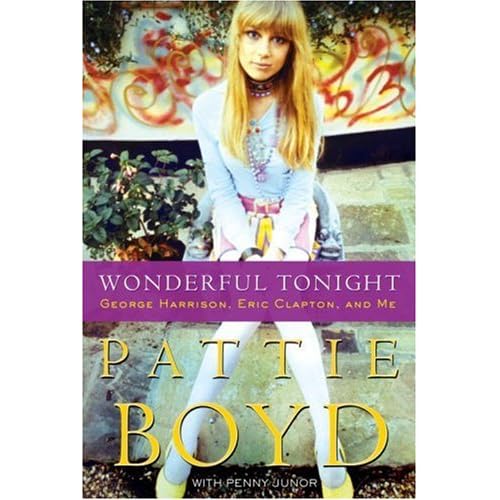
As a fan of both the Beatles and of Eric Clapton, I found the idea of an auto- biography of Pattie Boyd, the woman who had married both Eric and George Harrison, to be one that I couldn't miss. She had a front row seat to the all of the post Hard Day's Night Beatles and to Clapton's years with Derek and the Dominoes and his early solo Career. Boyd is Layla! So I was anxious to read Pattie's story called Wonderful Tonight. I thought this would be interesting not only as a person who has read a lot of Beatles books but I had recently read Clapton's autobiography. The difference between them is striking. I thought that Eric's book is, curiously, the better written of the two. I say that this is curious because Boyd's is basically written by her collaborator, Penny Junor, while Clapton rewrote his ghost-written book himself. More striking, though, is that Eric rewrote his book because he said it was too easy to blame other people in the ghost-written version. Blaming themselves is something that recovering addicts seem to do well. They know that the things that they do when they're drunk are not someone else's fault. In contrast, Boyd is eager to lay her problems at the feet of lots of other people; her parents, Harrison, Clapton, etc. I'm sure that living with these people was no picnic but Boyd seems to take little responsibility for her seemingly constant drinking. (She was bad enough that Clapton wrote the song "Shape You're In" about and to her.) Near the end of the book she simultaneously writes about being short on money but yet traveling to exotic places, something those of us who are not high rollers have a hard time understanding.

To make matters worse there are a couple of errors that, while they're not a big deal, are irritating. Boyd talks about the wonderful Harrison song, "Something," that he wrote for her. Unfortunately, she says that it's on the White Album instead of on Abbey Road, where it really is. Then, near the end of the book she said that she had to sell a rare guitar because she needed the money – she sold a "1960 Les Paul Stratocaster." As any guitar player knows there are Gibson Les Pauls and there are Fender Stratocasters. What she wrote is the equivalent of saying that she has a Cadillac Mustang. She clearly doesn't really know what we had.

But quibbles aside Wonderful Tonight is just not a great book. Her story, especially as it gets near the end, just isn't interesting enough, which seems hard to believe. Beatles fans who have read other books about them will learn nothing new here. Clapton fans might find this new perspective interesting but, frankly, she doesn't add much to that story either. So, if you want to read it, do what I did – check it out of the library. I'm unlikely to ever want to refer back to it.

Saturday, October 20, 2007

Clapton – The Autobiography

I just finished reading Eric Clapton's autobiography and found it to be a fascinating and powerful story. I recommend it to anyone who has enjoyed his music over the years and in reading it you really get a sense of Clapton's voice. This feels almost more like he is sitting in the room telling his story – the writing is very conversational and clear.

Generally, I felt that it was too short. Cream, for example, gets one chapter and there is so much more to say about those days that I'd like to hear some of the other stories. But in fairness, this book is really in many ways the story of Clapton's slide into drug addiction and alcoholism and his recovery. That is clearly the story he wants to tell because he considers that primary. His secondary story, it seems, is that he now, after 20 years of sobriety, has sorted out the mess he made of his life and has a young wife and a family who he dearly loves. In fact, the last part of the book may actually be a little long as he celebrates how ordinary his life has become. It's hard to begrudge him spending those pages on his happy days, especially after being so candid about his failings early on in the book.

I wish there had been a bit more about the making of the music but then again I almost always say that about first person accounts by musicians. The making of music is hard to talk about and who played what and why is incredibly boring for all but a few of us music nerds so I can see that those things are toned down in books like this. And, frankly, his life was about a lot more than recording albums, even though that is the only part I got to see before this.

It is interesting to me, not having known the story of his addiction and alcoholism well before this, that the point at which he got sober matches well with the point at which I think his playing improved. I consider Journeyman to be a turning point album for him (and I did at the time too) and it turns out that this is soon after he stopped drinking. In fact, his recorded output has been quite strong from that point on. Not surprising.

So overall, this is a fine book, one that I'm sure I'll enjoy picking up again and reading certain passages from, especially when I'm listening to his music for a certain era.

Monday, May 28, 2007

'Velvet Elvis' by Rob Bell

Rob Bell is the pastor of the enormously popular Mars Hill Church in Grandville, MI. I visited Mars Hill once a few years ago when Laura and I took a few weeks to visit other churches and, unfortunately, he wasn't preaching. I bet we had four or five people (who we saw there and knew) tell us that we should come back some time when Rob was preaching – we didn't even bring it up – they just told us that because it makes such a difference. Clearly, this church is as big as it is because of the charisma and the preaching of Rob Bell.

I've also seen (and appreciated) some of Bell's Nooma video series. Nooma is a series of short (approx 8 min) videos in which Bell talks about something. These are good discussion starter videos and, at least one of them gave me a new insight into scripture. Velvet Elvis is a lot like those. It is basically a series of short unconnected essays in the same style that Bell uses in his videos. This isn't a book that makes one particular point – it's a book of independent musings. Bell does this well and some of his insights are particularly good but the book never gets any traction on any particular subject. The chapters could almost be in any order.

Bell's writing style tends to be many short paragraphs.

Really short.

Like sometimes only a word or two.

He writes much the way he speaks.

If you pause briefly at the end of each of these mini-paragraphs you get a sense for the way he talks.

At least in the videos.

So it took me a while to get into his writing style which, frankly, bugged me for the first chapter or two. But once he got into some better content I was less irritated by the style.

Overall, Velvet Elvis is a fine book. It reads quickly and has some good information in it – perhaps not as much a you might think. If I get the opportunity I think I'll probably read his follow up book, Sex God, although I'm guessing that it is basically more of the same. That's not all bad but I was left wishing that there had been something in particular that I took away from Velvet Elvis other than a series of "that was cool" moments.

Monday, April 23, 2007

'While My Guitar Gently Weeps: the Music of George Harrison' by Simon Leng

While My Guitar Gently Weeps is a Beatles Geek Beatles book. The bulk of the book is an album by album tour through the music of George Harrison, primarily after the breakup of the Beatles. Not only is it album by album, each song gets its own little write up. In addition to listing all the musicians on each song the songs are discussed in depth followed by a discussion of the album as a whole. For the average person with a reasonable interest in the Beatles this book is the very definition of overkill. For people like me it’s about right.

There is no way that you can enjoy this book and not be thought of as a total dork by your friends. First of all, if you enjoy this book you probably have copies of even the obscure and not great Harrison albums, like Gone Troppo. You also probably know many of the obscure facts in the book and already have opinions on the plethora of trivia and inconsequencia that lives on almost every page. But that’s just the point. So much has been written about the Beatles that it’s hard to find new things to say but Leng has said a lot here that, frankly, hasn’t been gathered in one spot before – at least not that I’ve seen.

He does a nice job of highlighting Harrison’s contribution to the music of the Beatles in the first section of the book, pointing out that George was more about adding to the song than being a guitar-slinger. He’s such a fan of George’s though that he might be giving him a bit more credit for things than he deserves. Actually, if I have a complaint about this book it’s that Leng is too much of a Harrison fan, finding the good in even his most trite and mundane songs. Granted, to write this much about a musician you better be a fan (or at least be very well paid) but Leng is occasionally over the top in his praise of all the things that George did. Even when he reviews albums that are universally panned he finds many good things to say about them often pointing out that the pans were more along the lines of “look at all these people who missed the point.” To be fair, Leng is pretty harsh on Harrison's album Somewhere in England but he lays most of the blame for that one on the record company who rejected George's first pass at that album.

So, Leng’s book is certainly one that you will want to read if you’re a real Beatles Dork. But, surprisingly, Leng’s writing is crisp enough and the story is interesting enough that even the more casual fan will enjoy many parts of it. I certainly have enjoyed it and I’m guessing that most Beatles fans will – even those who don't own Gone Troppo.

Saturday, March 10, 2007

Lizzie Bright and the Buckminster Boy by Gary D Schmidt

This past year I have enjoyed being part of the Book of the Quarter group at Calvin Theological Seminary. Each quarter President Neil Plantinga selects a book that a number of folks read and we get together a few times over lunch at the Seminary and talk about what we have read. I’ve read some good books (only one of which I’ve reviewed before on this blog – I’m not sure why I only reviewed one of them) and I’ve enjoyed the fellowship and discussions about the books. These are not typically books about preaching or theology, rather they are good and interesting books that inform our thinking and generate discussion.

This quarter the book is by Gary Schmidt, Lizzie Bright and the Buckminster Boy. Gary is a colleague of mine at Calvin College and this book has won a number of awards including being named a Newberry Honor Book, one of the highest awards that a book for children can receive. So one would expect this to be a good book. What I didn’t expect was that it would grab me as it did and that the writing would be as crisp and as delightful as it was. The plot is based on historical events from Malaga Island, off the coast of Maine in the early part of the twentieth century. Schmidt gives us this history story through the eyes of a boy, a minister’s son, who can’t imagine why the town of Phippsburg would want to get rid of the people who live on nearby Malaga Island, including a young girl he befriends.

Even though it is a children’s book it is not short. But even at 216 pages, I had a hard time putting the book down. Gary Schmidt has done a wonderful job with this book and it is well worth the read.

Sunday, February 11, 2007

Midnight Riders: The story of the Allman Brothers Band by Scott Freeman

In reading a recent book about Layla, the author mentioned that Scott Freeman’s book, Midnight Riders: The story of the Allman Brothers Band was probably the best on the subject so, since I know little about the story of the Allmans (although I know their music well) I figured I’d give it a look. I’ve written before about Duane Allman and how the band’s Fillmore East album was practically the soundtrack to my freshman year of college but I was surprised at how little I knew of the story of the band, particularly after Duane died.

Freeman tells the story well but it is such a convoluted tale of drugs, fame and wasted opportunity that it’s a bit depressing. This is a band that had the world by the tail and blew it mostly because of immature behavior, drugs and alcohol. (Haven’t there been enough bands now who have had this happen to them that the young ones might say “hey, that’s a trap – I better be careful!” Books like this ought to be required reading at the school of rock.)

I have to say that I was quite turned off to the band (especially Gregg Allman and Dickie Betts) after reading about their story. I wasn’t surprised at the excesses because the band Stillwater in the film Almost Famous was based them to some extent so I had a bit of warning. It is interesting when I read books about bands because if I’m already predisposed to like the people I usually find myself focusing on their more recent good behavior (Clapton, McCartney) but if I don’t have a real fondness for them going in then I often have the other reaction. In the case of Phil Lesh I wanted to give him the benefit of the doubt because I think he’s cleaned up a lot lately and saw the error of his drug ways so when I read Searching for the Sound (his autobiography) and I reviewed it in this blog I wasn’t critical of his drug use but rather the way he seemed so casual about relationships – something that he now ought to know better about.

So it might not have been a good idea for me to read Midnight Riders. It gave me a more accurate but much less flattering view of the band than I had before and, since the book was written before the current incarnation of the band, I have no way of knowing if the members have gotten their lives together or not. I hope so because they can sure play!

(By the way, the hardcover edition has a lot more subtle cover than the one I'm showing on this post - I'm not a big fan of the one shown here.)

Monday, February 05, 2007

Searching for God Knows What – Donald Miller

I usually have a number of books that I’m working through depending on what’s going on in my life and which books I happened to get excited about this very minute. My shelf of books-I’m-about-to-read has grown to ridiculous proportions and I accumulate new books at a faster rate than I actually read the ones I’ve got and I have bookmarks in a half dozen of them. It’s a sickness.

But I did manage to actually finish a book on the plane home from Philadelphia this week: Donald Miller’s Searching for God Knows What. Having read and enjoyed Blue Like Jazz, I was really looking forward to seeing if the quirkiness of that book could be carried over to another. The answer is a qualified ‘yes.’

Miller’s very engaging writing style is still present in no small measure but Searching is, I believe, trying much harder to make a point than Blue Like Jazz. And while that point is a perfectly good one and Miller does a nice job of tying things together to get there I found it a bit more tedious. What I liked about Jazz what that you literally never knew what you were going to get. The book was filled with Miller’s weird friends and unique situations where they are more like occasional guests in Searching.

Miller’s point is well taken and some of his analogies along the way caused me to think about human relationships and about our relationship to God in new ways and I'm glad I read it. But I was spoiled by the freewheeling fun of Blue Like Jazz and, if asked to recommend a Miller book to someone, will go with that rightfully more popular book.

Sunday, January 21, 2007

Layla and Other Assorted Love Songs, a book by Jan Reid

I was a freshman in college and, even though I had bought the single for “Sunshine of Your Love”, the Blind Faith album and Clapton’s first solo album I somehow missed Layla. (Curiously, I didn’t own any Cream albums until later, because I usually listened to a friend’s copy of Disraeli Gears and Wheels of Fire.) Maybe it was the name of the band, Derek and the Dominoes, or maybe it was the cover which somehow didn’t grab my attention but somehow I completely missed it. Fortunately, that year my good friend and band-mate Pete introduced me to both Layla and the Allman Brothers Band Live at the Fillmore East, two albums which featured Duane Allman. These two albums were the soundtrack to much of that year for me and Pete kept them in my room. I had a stereo and he didn’t. (Hey, it was 1972!) As I got home for the summer and no longer had Pete's copies I went out and bought both albums because they were essential to my listening life.

Many many years later I'm still a big fan of both Eric Clapton and his album, Layla and Other Assorted Love Songs. I’m surprised at how little I’ve read about Clapton, since I tend to do a fair amount of rock much reading but I just haven't read much about him. So when I saw that this new book by Jan Reid had come out I checked my local library and I was able to get it from one of their cooperating libraries. Along the way looking for this book (and while I waited for it to come in) I picked up Eric Clapton; Edge of Darkness by Christopher Sandford. I’ve written in this blog before about my dislike of Sandford’s book on Paul McCartney so I picked up Edge of Darkness warily. My misgivings were indeed true and I didn’t get very far in Sandford’s book before I put it down in disgust. Sandford seemed to dwell on the drugs, the drinking and the sex. Reid’s book mentions these things – it’s an essential part of the story – but Sandford seems to go out of his way to wallow in it, much like he did in the McCartney book. And I don't like the way he writes.

But I didn’t come here today to complain about Edge of Darkness, I came to say that Jan Reid's Layla and Other Assorted Love Songs by Derek and the Dominoes is a pretty good book. It is nice that Reid really focuses on the time period in which Clapton and the Dominoes recorded Layla. He does some background stuff but all of it is necessary to the put the album and the life of the band in context. He also writes about all five members of the band, although he covers Clapton in the most depth. His primary source for the book was keyboard player and singer Bobby Whitlock who seems to remember pretty well what happened and actually lived to tell about it. He and Clapton are the only survivors of the Dominoes - drummer Jim Gordon is in jail for murder and suffering from schizophrenia, and both guitarist Duane Allman and bassist Carl Radle are dead.

The book is readable and does a nice job of covering the story of the people involved in the book both before and after the band’s short life. I especially enjoyed the chapter in which Reid actually writes about the songs on the album and does a lengthy review, song by song. It’s also nice that he has a chapter on what happened to the band members after the band broke up. That gives nice closure to the story. It seems that both Clapton and Whitlock are happy and well although Clapton has clearly had much more success. The book is not long, reads quickly and, if you’re interested in Clapton or in this incredible album, not only one of Clapton’s best but one of the all-time best rock albums, this book is a valuable resource.

Tuesday, January 09, 2007

My all-time favorite Beatles Book!

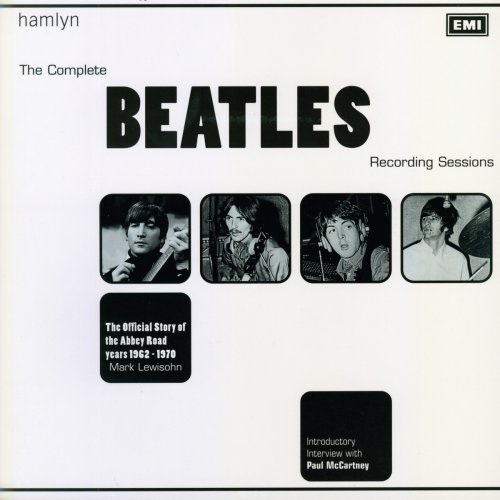
An internet friend asked me for some music-related book recommendations and I started with books about U2 and the Beatles because, well, because that’s what I read. As I was sitting at lunch today I realized that I missed one of the absolute best Beatle books of them all, The Complete Beatles Recording Sessions: The Official Story of the Abbey Road Years 1962-1970 by Mark Lewisohn.

The reason that I almost missed it is that I’ve had it for so long. This book (at least, the first edition, which I own) came out in 1988 and I got it soon after that. I think I perhaps got it for Christmas 1989 because I seem to remember living in Michigan when I got the book and we moved here in the summer of ’89. This book chronicles every Beatles recording session from the beginning in 1962 to the end in 1970, lists when they happened, what happened there and other interesting facts and tidbits. Since it first came out , things like the Anthology recordings have made them even more valuable.

This is, simply, a must-own book for serious Beatles fans. It accomplishes everything it set out to do. Since then a few new things have come to light thanks to McCartney’s authorized Biography and other recent excellent Beatles books which I have noted here before but the sheer amount of data in this book makes it well worth the effort. You’ll want to read it with your CD collection close at hand!

Tuesday, December 19, 2006

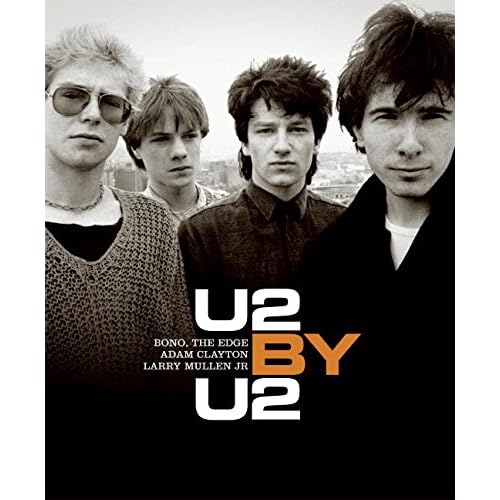
U2 by U2

U2 by U2 is a big book in almost every way. It’s a “coffee table book” in size, measuring more than 12 inches in height and it is thick with lots of words and lots of pictures. Not only that, but the story that it tells is big too. It is the story of four lads from Dublin who are short on technique and musicianship but who work and work and work at being good because they love the buzz they get when they’re on stage and everything is going well.

This book reminds me a lot of the Beatles Anthology in that the sizes are quite similar (if not identical) and the concept is exactly the same, the four voices of the band telling their story in chronological order. In U2’s case, the fifth voice of manager Paul McGinnis is appropriately added since he has been a vital member of the band almost from the start. Another difference is that the U2 book is, to me, a more compelling read. Perhaps I was just SO well-versed in the Beatles story that when their Anthology came out there was little that I didn’t know but I have found the U2 book hard to put down. (The Beatles Anthology was actually more than just a book – it was also a video series and a set of albums. The book was the last of the three to be released which may have also blunted its impact. It should be noted that I’ve watched the video series on television, on VHS and on DVD multiple times and listened to the CDs countless times so this is not meant to be critical the Beatles stuff even a little bit. It’s just an obvious point of comparison.)

I actually started reading U2 by U2 by dipping into it at random places and reading a page or two. I had some other things I needed to read and didn’t let myself really commit to reading it yet. But then I got hooked somewhere around the writing and recording of War and just kept going. When I finished I went back to the beginning to read what I missed. Then, when I got to the point that I had already read I just kept going again. Now I’m nearly finished for a second time. I haven’t done that with any book in recent memory.

Part of it is that I’m still reading it in five or ten minute snatches and that sort of reading fits this book well but I also am compelled by the way they tell their story, by the insights I’ve gotten into albums that are among my all-time favorites and also by the pictures which are sometimes really cool.

If you’re a U2 fan this book is an absolute must. It is one of my three must-read U2 books, the others being Bono in Conversation with Michka Assayas and U2 at the end of the World by Bill Flanagan. (There are, of course, many books analyzing their music, especially from a Christian perspective which I think are valuable as well. My favorites are Walk On: The Spiritual Journey Of U2 by Steve Stockman and Get Up Off Your Knees: Preaching the U2 Catalog by Raewynne J. Whiteley and Beth Maynard.)

If you still have time to add something to your Christmas list U2 by U2 would be a great addition.

Saturday, September 09, 2006

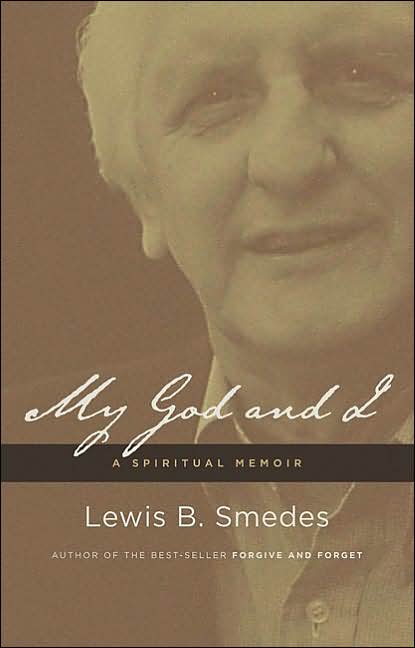
My God and I by Lewis Smedes

Lewis Smedes, former Calvin College professor and later professor at Fuller Seminary in California, wrote a spiritual memoir as his last book before his death. My God and I wasn’t intended as his last book when he wrote it (he died as the result a fall before it was published) but it is a fitting end to a distinguished career. Smedes’ pleasant writing style drew me in as I read about his grandparents and parents. The story of how he grew up and his path to academics was fascinating to me partly because I was familiar with many of the places and names that he mentions but mostly because his story is a compelling one. Smedes is able to see God’s hand in his life in a way that is not at all happy-clappy or syrupy. He talks openly about how his prayers for terminally ill people rarely if ever makes a difference in their healing but yet he continues to do it. He gives an unvarnished look at his own battle with depression and how he praises God for his medication.

Overall I found My God and I a delightful read. Smedes keeps things moving, never dwelling long on any one subject. The first few chapters, outlining how God used a woman who was evicted from her own house because of a pregnancy gives us a concrete example of how God can use a situation in which we see little hope and turn it to good – that woman’s grandson became a world-class theologian and inspiration to many people, including me.

Saturday, August 26, 2006

'Who's Afraid of Postmodernism' by James K. A. Smith


I don’t read a lot of philosophy but the topic of postmodernism interests me, especially as it relates to the emergent church and Jamie Smith is a colleague of mine at Calvin College and we occasionally sit next to each other in chapel. (Here is his blog.) So when I saw Who’s Afraid of Postmodernism at a bookstore this summer I thought it would be a great thing for me to read. It turns out, I was right.

Smith looks at the “unholy trinity” of French philosophers Derrida, Foucault and Lyotard, considers the phrases that they are best known for and unpacks those phrases to help the reader understand what they really said – often not what we think based on a first reading of the phrase. I found these discussions enlightening and engaging. (And, to top it off, I read some of it IN PARIS – how cool is that?) Smith uses recent films to illustrate each of his main points which makes for an effective way to pull non-philosophers like me into the material. Finally, Smith takes each of them to church and relates their thoughts to the church. Since they are often seen as enemies of the faith it is helpful to see that what they really said does not have to be seen as diametrically opposed to the faith but, rather, there are some things we can learn from them. In a final chapter Smith helps us see what the church in the postmodern world can be.

I found this book to be readable (although the chapter on Foucault a little less so) and fascinating. Smith is a good writer and he has great insight into the church. I truly enjoyed reading this.

Thursday, August 24, 2006

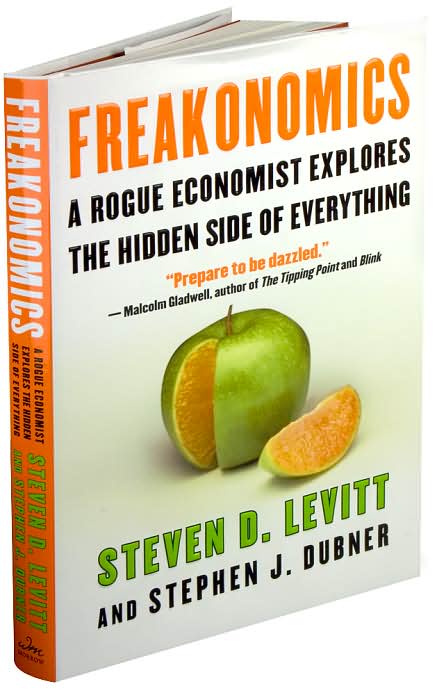
'Freakonomics' by Steven Levitt and Stephen J Dubner


Every quarter Calvin Seminary sponsors a book group. Last spring we read the wonderful Gilead by Marilynne Robinson (my review is here). This quarter the book is the quirky Frekonomics by Steven Levitt and Stephen Dubner. Levitt is an economist (a “rogue economist", according to the book jacket) who has a unique view of the world. Dubner, a reporter, did a feature on him and many people enjoyed it and suggested that Levitt write a book. Levitt had no interest in that but suggested that he’d be the source if Dubner would write it and so we have the book of Levitt’s as written by Dubner.

Levitt does, indeed, have a unique view of the world. He thinks that lots of difficult questions can actually be answered if you have the right data. And he thinks he often has the right data. These are questions like “If selling crack is so lucrative, why do crack dealers live with their moms?” and “do realtors really get people the best prices on their homes?”

Throughout the book it seems like Levitt continues to pull rabbits out of his hat with one amazing data trick after another and as the book goes on you keep waiting for it to add up to something. That’s just the thing, though. It never really does. It’s like all topping and no pie or all dessert and no main course. Pick your own metaphor and it might well work too.

Don’t get me wrong, half way into the book I was telling people about it and saying “this is a cool book – you should read it” to people but, by the time I got finished I was less enthusiastic. I think Levitt has some really interesting ideas (although the chapters on the crime rate being linked to abortion were just a little weird) but there is no grand climax to the book. I really wanted it to go somewhere but it just never did.

So, if you have a chance you might want to read it because there is a lot of cool stuff in there but don’t read it looking for Levitt to tell you “what it all means” because to him it seems that it’s just the solution to yesterday’s crossword puzzle that he left here to amaze us. In the meantime he’s off checking on something else.

Sunday, June 18, 2006

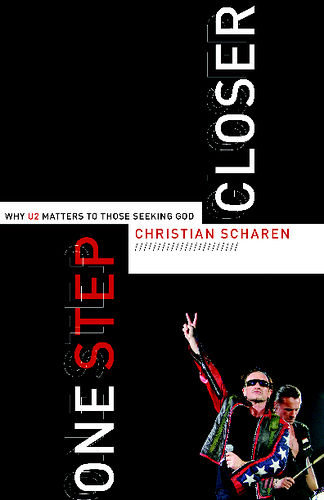
'One Step Closer' by Christian Scharen


I just finished reading One Step Closer. I have followed the story of this book on Christian Scharen’s blog over the past year and it was good to finally read the book. Curiously, I got it at the Children’s Spirituality Conference and this isn’t a book about children at all but it was there and it was half-price at the Baker table so I got it even though I’ve read plenty of U2 books – not as many as Beatle books but certainly more than I need to.

And that’s my primary issue with One Step Closer – for those of us who have read a lot about U2 there isn’t a whole lot that is new in this book. The theological insights are fine and the U2 connections are pretty much right on target but I didn’t read much that I hadn’t either read before or thought before. But that’s not necessarily a bad thing. For people who are just starting to get interested in U2, especially the connection between them and Christianity, this is a fine introduction. I have already suggested it to my two youngest daughters. The obvious comparison point is Steve Stockman’s Walk On but the books really come at the topic differently – Stockman starts with U2 and Scharen starts with Christian doctrine and then makes the U2 connection. (Raewynne Whiteley and Beth Maynard’s Get Up Off Your Knees, another excellent book, is less systematic but also covers some of the same ground.)

The book is written in an easy-to-read conversational manner, goes quickly and does a nice job, both theologically and musically. I really liked Scharen’s introduction to hope and his take on the difference between hope and optimism. Nicely done.

The important thing here is that Scharen isn’t trying to layer something on top of the music that isn’t already there. He picks out things that were put in carefully by the band and he illuminates them with theology. I enjoyed it. So if you’re a Christian and a U2 fan you will probably want to read this book because this is about the stuff you like to think about. If you’re just getting into U2 One Step Closer is a good place to start because it will help you see what this band is really all about.