Showing posts with label Eric Clapton. Show all posts

Sunday, December 19, 2010

Favorite albums of the year

I’ve not updated this blog very much this year – my job has kept me especially busy lately. But I have been listening to a lot of music (I still have my 45 min commute) and, as I have done for the past few years, I have compiled a list of my favorite music for the year. So here they are, in no particular order - the albums that especially got me excited this year.

Robert Plant / Band of Joy – This album surprised me. I listened to Raising Sand, Plant’s duet album with Allison Krauss and, while I liked it, I didn’t spend much time with it. Band of Joy, though, is a bit moodier and the production is airy and interesting. Plant’s singing is, of course, great. I was a fan of Led Zeppelin in the 70s but haven’t listened to much of his solo work. Plus it is fun to hear Plant singing in his lower register.

Elvis Costello / National RansomMomofuku, Costello’s album two albums ago was great. I thought it was up there with his very best. But I was disappointed with the follow-up, Secret, Profane and Sugarcane. I found the melodies on SP&S to be not as intriguing and the sound of the album didn’t move me. National Ransom is like an extension of Secret except Costello branched out a lot more in style so, where SP&S was somewhat one style throughout, Ransom is quite varied. Every once in a while, when I’m listening to Costello, I realize what an amazing writer he is – his songs have interesting chord progressions and his melodies, which are catchy, are not obvious. I’ve noticed that on many of the songs on National Ransom. It ranks up there among my favorite Costello albums.

Sufan Stevens / All Delighted People / The Age of Adz – This year, Sufjan Stevens put out both and EP and a full album, although the EP was nearly an hour long so calling it an EP was a bit strange. Both of them are among my favorite albums of the year. All Delighted People features a lot of what we’ve come to expect from recent Sufjan albums, twittering flutes, interesting arrangements and heartfelt (if not a bit obscure) lyrics. It is great. Some of the eight tracks are long but the arrangements are complex enough to hold my attention throughout. This album (OK, he calls it an EP so that we realized it wasn’t meant to be his BIG STATEMENT) is great - maybe the lowered expectations helped me see as just a nice collection of songs. Then a few months later he delivered The Age of Adz, a big electronic serious album about schizophrenia and identity. When I heard it I realized that, indeed, All Delighted People was just the warm up. The album is complex and fascinating in it’s combination of quirky Sufjan flutes and other wind instruments mixed with the beeps and blurps of electronica.

Fistful of Mercy / As I Call You Down – Fistful of Mercy is Dhani Harrison, Beh Harpur and Joseph Arthur, all three interesting indie artists who have their own projects. I became aware of them because of Dhani Harrison, George’s son, and because I liked his album of last year with his band thenewno2. In fact, I named their album one of my favorites of the year. Their new project, Fistful of Mercy, is quite different – part Crosby Stills and Nash, part Traveling Wilburys. Not the most elegant or serious album in my collection but it features fine (although a little quirky) three part harmonies most of the time and a nice acoustic vibe throughout.

Eric Clapton / Clapton – Releasing a self-titled album more than 45 years into your career says something. In this case it says that this is a very personal album. While not as emotionally raw as Pilgrim, as radio-friendly as Slowhand, or as guitar heavy as Journeyman, Clapton is a warm relaxed tour through much of the music that Eric Clapton has found himself drawn to over the last few years. There are few songs with drums playing flat-out, for example. Most of them feature brushes or at least drums that are gently played or pushed to the background. But this isn’t an earthy acoustic album – this is a jazzy album that is a combination of blues and standards featuring Clapton the singer as much as Clapton the player. Some of the songs would be at home on an album from the 1940s while others would sit nicely on Clapton’s duet album with J J Cale and still others would be on a slightly softer version of one of Clapton’s blues albums like From the Cradle or Me and Mr Johnson. Don’t come to this album expecting to have your socks rocked off. Clapton apparently isn’t interested in that right now. But for a mature album by a veteran musician, this one is great.

Peter Gabriel / Scratch My Back – The reviews of this album are all over the map from “best ever” to “what was he thinking?” so I hesitated before getting it but when I did I quickly joined the “best ever” camp. Gabriel, who famously instituted a “no cymbals” rule for one of his early solo albums put in a “no guitars or drums” rule on this album and gave us a lushly orchestrated album of cover versions of songs by other artists. The arrangements are hauntingly beautiful and a few of the songs are slowed down to the point where you hear them in a whole new way. His cover of Arcade Fire's "My Body is a Cage" is gripping and Lou Reed's "The Power of the Heart" is just beautiful.

Phil Keaggy and Jeff Johnson / Frio Suite – Phil Keaggy has released a number of albums over the years but lately he’s been doing some interesting work with other artists. He’s released albums with Randy Stonehill, with Jack Giering and John Sferra and soon he’ll be releasing an album with percussionist Kyle Jones. (He gave me a copy of that album, called Numen, which may well end up on my next year’s list – it doesn’t seem fair to put an album on here that isn’t out yet so I'll wait on that one.) Frio Suite, with keyboardist Jeff Johnson is a beautiful, new-age-type album that is subtle and moving. The two of them recorded this at a distance, each adding their own parts in their own studio, but you'd never know it by listening. It sounds like a wonderful journey down a metaphorical river.

Finally, two albums that I really haven’t taken the time to dig into yet but I want to add to this list because I think they belong here:

Arcade Fire / The Suburbs – Another great Arcade Fire album – they’re three for three now. I like how they manage to tackle big issues while at the same time being not uber-artsy and inaccessible. I find their music often takes me a while to really understand and this one is no exception.

The Rescues / Let Loose the Horses – The Rescues was my big discovery last year and Let Loose the Horses is their first major label release. I don’t like it quite as well as their earlier stuff – yet, at least – but I’m a fan of their harmonies and their sound. Also of note, their cover of Katy Perry’s “Teenage Dream” (unfortunately, not on this album – but available as a single on iTunes) is awesome.

Saturday, December 19, 2009

2009 - albums of the year.

This has been a strange year of listening for me – not many new albums have really grabbed my attention. Plus, for a couple of reasons, I spent time rediscovering old albums. The Beatles remasters of course were released in September and, while I’m getting the stereo remasters for Christmas, the mono remasters have been in my rotation for a couple of months and they’re spectacular. I can’t wait for the stereo ones. U2 came out with a remastered Unforgettable Fire which was a great thing to listen to. Between old U2 and the Beatles there isn't a whole lot of room for new music to creep in.

On top of that I spent part of the summer deliberately going back and listening to old classic albums that I had somehow missed the first time around, albums like Blue by Joni Mitchell and Electric Ladyland by Jimi Hendrix. They are clearly on my best listening of the year list. I also continue to enjoy Electric Arguments by the Fireman (Paul McCartney) which was on my list last year.

But none of those are new albums – there actually are only a handful of new ones that got me excited, two of the are live albums of bands playing old stuff. One that surprised me is Over the Rhine’s Live from Nowhere, Vol. 4. I had low expectations for this album since it was all songs from my least favorite OtR period, their earliest days. But the playing and singing on LfN4 is just wonderful – it’s a reunion concert of the early band and Ric Hordinski’s playing is great. Eric Clapton and Steve Winwood (who made up half of Blind Faith in the 60's) released Live from Madison Square Garden which is a very good live album with both Clapton and Winwood at the top of their game. I got to see their tour last summer and Clapton was clearly playing very very well. I never dreamed that I'd actually ever see the two of them playing Blind Faith songs together live. It was great (although they were playing even better when I saw them than they did on the album!)

Three new bands caught my ear this year. Owl City’s album Ocean Eyes is a lot of fun. The song “Fireflies” grabbed me right away and the rest of the album followed suit. It might sound too much alike over all but I'm not sick of it yet. I discovered another new band, the Rescues – I think they’re great and their album Crazy Ever After got a lot of play last summer too. The Rescues is a collection of four solo artists who together have catchy tunes, lush harmonies and interesting arrangements. Dhani Harrison’s band thenewno2 (the new number 2) released You Are Here, an album that has glimpses of his father George’s melodic style but cast in a fresh way. This is not just a son cashing in on his father’s name – I think Dhani might have a real future ahead of him. Even though I got it early in the year I keep going back to it.

Finally, my number one album of the year has to be U2’s No Line on the Horizon. This album is adventurous and risky but there are moments of sheer brilliance like “Magnificent” and “White as Snow.” I even like the lead single “Get on Your Boots.” Whenever I don’t hear the album for a few weeks and listen again I get excited because it’s just so good. I remember when I first got it I listened with my ipod in a hotel in Troy, MI and was just blown away. That was when I realized what a very special record this was. I got to see U2 in Chicago this fall and I will again in East Lansing next summer. The clear high point to my musical year!

Friday, July 24, 2009

Eric Clapton - better than ever

I’ve watched Eric Clapton in three different videos so far this summer and seen him live once (with Steve Winwood – an absolutely amazing show) and I am convinced that he is playing and singing as well as he ever has. What’s more, his personal life seems to be in such good shape that he has been able to sustain this level of playing now for quite some time. In his recent Live DVD with Steve Winwood, Steve talks about how Eric is now a really fine singer and band leader – two things he did not want to do in Blind Faith. That’s been true now for about 20 years – since he got sober and straight.

It is interesting to watch the arc of Eric’s career before that point. He was always a great player but he seemed to have lots of near misses. For every album like Slowhand there was the lesser No Reason to Cry. His fans, me among them, were waiting for that killer album that would blow us all away like Layla did. We had a long time to wait because, even though Layla was recorded under “enhanced” conditions, the drugs soon took their toll on Clapton and for a while he did absolutely nothing. Then came the string of albums in the late 70’s and 80’s, which were quite uneven. He seemed to not want to do what we really wanted him to – play the guitar in a way that made us realize what all the fuss was about.

I find the live album Just One Night to be a good example of where he was during that period. There are great moments on that album but much of the album is spent playing the songs that were OK but not the ones we really really wanted to hear. He’s got some great solos but the whole album just often leaves me cold. For one thing, he seemed intent on using a really thin sound on his guitar, one that didn’t let him take control of the band the way he did back in the 60’s and early 70’s.

Then, in 1989, I remember getting his Journeyman album – the one that, for me shows him getting back to who he really is – and realizing that this was the Clapton that I had been missing all along. The live album that followed that, 24 Nights, was, according to his autobiography, almost a throw-away because of his grief over the loss of his young son. But you can hear that he’s playing better than he has for quite a while and his song choice harks back to songs from Cream and Derek and the Dominoes as well as the great new songs on Journeyman. And to show that it wasn’t a fluke, his Unplugged album, which was released right after 24 Nights, showed him to be a fine acoustic player and highlighted his singing voice. It also featured the song “Tears in Heaven,” which won him the first of his THREE Grammy Awards for pop VOCAL.

Since then he’s released a number of really fine albums including the amazingly personal Pilgrim and what I think is his definitive live album, One More Car, One More Rider. His latest studio solo album was, frankly, the weakest one he’s released in a while, but even that one has great playing on it. I was also really impressed, both times that I’ve seen him this decade, with his professionalism and his fine playing. He’s come through the rock and roll excesses and emerged a winner. If you get the chance to see him now you’ll be seeing one of rock’s premier players and singers at the top of his game.

Saturday, December 08, 2007

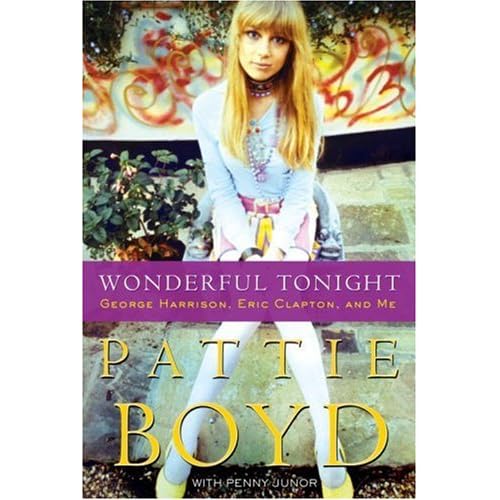
Pattie Boyd – Perhaps Not So Wonderful

As a fan of both the Beatles and of Eric Clapton, I found the idea of an auto- biography of Pattie Boyd, the woman who had married both Eric and George Harrison, to be one that I couldn't miss. She had a front row seat to the all of the post Hard Day's Night Beatles and to Clapton's years with Derek and the Dominoes and his early solo Career. Boyd is Layla! So I was anxious to read Pattie's story called Wonderful Tonight. I thought this would be interesting not only as a person who has read a lot of Beatles books but I had recently read Clapton's autobiography. The difference between them is striking. I thought that Eric's book is, curiously, the better written of the two. I say that this is curious because Boyd's is basically written by her collaborator, Penny Junor, while Clapton rewrote his ghost-written book himself. More striking, though, is that Eric rewrote his book because he said it was too easy to blame other people in the ghost-written version. Blaming themselves is something that recovering addicts seem to do well. They know that the things that they do when they're drunk are not someone else's fault. In contrast, Boyd is eager to lay her problems at the feet of lots of other people; her parents, Harrison, Clapton, etc. I'm sure that living with these people was no picnic but Boyd seems to take little responsibility for her seemingly constant drinking. (She was bad enough that Clapton wrote the song "Shape You're In" about and to her.) Near the end of the book she simultaneously writes about being short on money but yet traveling to exotic places, something those of us who are not high rollers have a hard time understanding.

To make matters worse there are a couple of errors that, while they're not a big deal, are irritating. Boyd talks about the wonderful Harrison song, "Something," that he wrote for her. Unfortunately, she says that it's on the White Album instead of on Abbey Road, where it really is. Then, near the end of the book she said that she had to sell a rare guitar because she needed the money – she sold a "1960 Les Paul Stratocaster." As any guitar player knows there are Gibson Les Pauls and there are Fender Stratocasters. What she wrote is the equivalent of saying that she has a Cadillac Mustang. She clearly doesn't really know what we had.

But quibbles aside Wonderful Tonight is just not a great book. Her story, especially as it gets near the end, just isn't interesting enough, which seems hard to believe. Beatles fans who have read other books about them will learn nothing new here. Clapton fans might find this new perspective interesting but, frankly, she doesn't add much to that story either. So, if you want to read it, do what I did – check it out of the library. I'm unlikely to ever want to refer back to it.

Saturday, October 20, 2007

Clapton – The Autobiography

I just finished reading Eric Clapton's autobiography and found it to be a fascinating and powerful story. I recommend it to anyone who has enjoyed his music over the years and in reading it you really get a sense of Clapton's voice. This feels almost more like he is sitting in the room telling his story – the writing is very conversational and clear.

Generally, I felt that it was too short. Cream, for example, gets one chapter and there is so much more to say about those days that I'd like to hear some of the other stories. But in fairness, this book is really in many ways the story of Clapton's slide into drug addiction and alcoholism and his recovery. That is clearly the story he wants to tell because he considers that primary. His secondary story, it seems, is that he now, after 20 years of sobriety, has sorted out the mess he made of his life and has a young wife and a family who he dearly loves. In fact, the last part of the book may actually be a little long as he celebrates how ordinary his life has become. It's hard to begrudge him spending those pages on his happy days, especially after being so candid about his failings early on in the book.

I wish there had been a bit more about the making of the music but then again I almost always say that about first person accounts by musicians. The making of music is hard to talk about and who played what and why is incredibly boring for all but a few of us music nerds so I can see that those things are toned down in books like this. And, frankly, his life was about a lot more than recording albums, even though that is the only part I got to see before this.

It is interesting to me, not having known the story of his addiction and alcoholism well before this, that the point at which he got sober matches well with the point at which I think his playing improved. I consider Journeyman to be a turning point album for him (and I did at the time too) and it turns out that this is soon after he stopped drinking. In fact, his recorded output has been quite strong from that point on. Not surprising.

So overall, this is a fine book, one that I'm sure I'll enjoy picking up again and reading certain passages from, especially when I'm listening to his music for a certain era.

Friday, July 06, 2007

Desert Island Discs Part Three – Eric Clapton’s One More Car, One More Rider

So far in my desert island list I've gone to my favorite artists and picked which CD of theirs I'd most want to take along. That is as opposed to looking specifically at CDs and judging each on their own merit. I expect to think about things this way for a few more weeks since I've already started and it makes sense to me to do it this way (and it's easier). So this week I turn my attention to an artist that I first became familiar with when as an eighth grader I heard "Sunshine of Your Love" on the radio. This was 1968 and that song served as my intro to blues-based guitar music. I listened to friends' copies of Cream's Disraeli Gears (which will likely show up on this list down the road) and
soon bought Eric Clapton's album with his new band, Blind Faith. I've missed only a few of his albums since – and there have been a lot. So picking one of Clapton's solo recordings is a challenge. The obvious choices, perhaps, are Layla (although it is really a Derek and the Dominoes album so I could get away with picking that one later too,) his two mid-career highlights, 461 Ocean Boulevard and Slowhand (but I think they are not his best,) or the album where he seemed to find his way as a guitar hero again, Journeyman and the album that re-launched him into the mainstream, Unplugged. But, having seen Eric's show less than a year ago and having paid attention to him for quite some time I think that, live at least, he's in as good a place as he's ever been. His shows are consistently great and he's got a wealth of material to choose from. That is why for this week's pick I am choosing his most recent live album, One More Car, One More Rider.

Like Matt, I'm a bit wary of choosing a live album because they can be little more than greatest hits compilations with clapping. But this 2-disc set shows Eric with a crack band playing at the height of his game. He does an acoustic set which features what I think is the definitive version of "Change the World." It blows the studio recording completely out of the water. It also gives added life to the songs from Pilgrim which suffered from a bit of production woes – the use of drum machine, for example, and Clapton's guitar tone made the album, which had some great songs, feel a bit brittle. But on One More Car songs like "River of Tears" have an amazing amount of emotion. Clapton's singing is spot on and his guitar just soars. Add a killer set list, ending with a wonderful rendition of "Over the Rainbow" – yes, that "Over the Rainbow" – and you have what I think is Clapton's best album.

The version of the album that I bought came with a DVD of the whole show too – and you get to see the late Billy Preston in the band singing his hit "Will it Go Round in Circles" which isn't on the album. You should see it just to watch Billy dance.

There are so far three more friends joining me on my desert Island journey. Special thanks to new list makers Matt and Jim for playing along. Check their developing lists:

My Complete Desert Island List (so far):

Sunday, January 21, 2007

Layla and Other Assorted Love Songs, a book by Jan Reid

I was a freshman in college and, even though I had bought the single for “Sunshine of Your Love”, the Blind Faith album and Clapton’s first solo album I somehow missed Layla. (Curiously, I didn’t own any Cream albums until later, because I usually listened to a friend’s copy of Disraeli Gears and Wheels of Fire.) Maybe it was the name of the band, Derek and the Dominoes, or maybe it was the cover which somehow didn’t grab my attention but somehow I completely missed it. Fortunately, that year my good friend and band-mate Pete introduced me to both Layla and the Allman Brothers Band Live at the Fillmore East, two albums which featured Duane Allman. These two albums were the soundtrack to much of that year for me and Pete kept them in my room. I had a stereo and he didn’t. (Hey, it was 1972!) As I got home for the summer and no longer had Pete's copies I went out and bought both albums because they were essential to my listening life.

Many many years later I'm still a big fan of both Eric Clapton and his album, Layla and Other Assorted Love Songs. I’m surprised at how little I’ve read about Clapton, since I tend to do a fair amount of rock much reading but I just haven't read much about him. So when I saw that this new book by Jan Reid had come out I checked my local library and I was able to get it from one of their cooperating libraries. Along the way looking for this book (and while I waited for it to come in) I picked up Eric Clapton; Edge of Darkness by Christopher Sandford. I’ve written in this blog before about my dislike of Sandford’s book on Paul McCartney so I picked up Edge of Darkness warily. My misgivings were indeed true and I didn’t get very far in Sandford’s book before I put it down in disgust. Sandford seemed to dwell on the drugs, the drinking and the sex. Reid’s book mentions these things – it’s an essential part of the story – but Sandford seems to go out of his way to wallow in it, much like he did in the McCartney book. And I don't like the way he writes.

But I didn’t come here today to complain about Edge of Darkness, I came to say that Jan Reid's Layla and Other Assorted Love Songs by Derek and the Dominoes is a pretty good book. It is nice that Reid really focuses on the time period in which Clapton and the Dominoes recorded Layla. He does some background stuff but all of it is necessary to the put the album and the life of the band in context. He also writes about all five members of the band, although he covers Clapton in the most depth. His primary source for the book was keyboard player and singer Bobby Whitlock who seems to remember pretty well what happened and actually lived to tell about it. He and Clapton are the only survivors of the Dominoes - drummer Jim Gordon is in jail for murder and suffering from schizophrenia, and both guitarist Duane Allman and bassist Carl Radle are dead.

The book is readable and does a nice job of covering the story of the people involved in the book both before and after the band’s short life. I especially enjoyed the chapter in which Reid actually writes about the songs on the album and does a lengthy review, song by song. It’s also nice that he has a chapter on what happened to the band members after the band broke up. That gives nice closure to the story. It seems that both Clapton and Whitlock are happy and well although Clapton has clearly had much more success. The book is not long, reads quickly and, if you’re interested in Clapton or in this incredible album, not only one of Clapton’s best but one of the all-time best rock albums, this book is a valuable resource.

Monday, September 25, 2006

Clapton at Van Andle Arena


It is always great to see an artist put together a top-notch performance. It’s even better when that performer seems to be at the top of his or her game, at a point where they seem to be right on the money most of the time. It is better yet when the performer is legendary. That’s what Bryan and Ron and I got last Thursday night at Van Andle Arena in Grand Rapids when Eric Clapton and his band came to town. Eric has put together yet another first-rate band but this time he has two young guitar-slingers to bounce off of and, with so much guitar talent on the stage, put together a set of tunes designed to let them jam and to show their stuff.

Eric served as host giving both Derek Trucks and Doyle Bramhall II ample opportunity to show what the next generation of great guitars players has to offer. But then, on every song, Clapton stepped up to the front to show that, not only had he not lost a step, but that he was still the guy to beat. His tone was unbelievable. His singing was right on target and he showed himself to be a consummate professional. The tone that he and Doyle got on their unison slide intro to “Motherless Children” was astonishing. His singing on “I Am Yours” was great and the tasteful slide work of Derek was just right – of course, that was true in almost every song. There wasn’t really a dull moment in the program. Clapton put together a program with few of his many hits. This was a program made for the fans with a couple of songs from Layla, a couple of songs from 461 Ocean Boulevard and even one from Money and Cigarettes! I gave the set list in my previous post. The Grand Rapids Press reviewer ended his review by writing “For more than two hours, Van Andel Arena resonated with something beyond the usual rock 'n roll fare, something truly enduring. It was the kind of show some fans will likely tell their friends and kids about for years to come and wish they could have brought 'em all along for the ride. Some artists are that important, some performances are that unforgettable.” I agree and I’m glad I took Bryan along with me! I wish I could have taken the whole family.

Saturday, September 23, 2006

Eric Clapton in Grand Rapids


I'll post more soon hopefully but I wanted to mention what an amazing show Eric Clapton put on Thursday night here in Grand Rapids.

Here is the setlist:

Pretending
I Shot The Sheriff Sheriff
Got To Get Better In A Little While
Old Love (with Robert Cray)
Everybody Oughta Make A Change
Motherless Children

Acoustic Set:
Back Home
I Am Yours
Nobody Knows You When You're Down & Out
Running On Faith

After Midnight
Little Queen of Spades
Further On Up The Road
Wonderful Tonight
Layla
Cocaine

Encore:
Crossroads (with Robert Cray)

Thursday, July 20, 2006

50 albums that changed music

Click on over to The Observer to see their list of 50 albums that changed music. I have a decidedly biased view of such things so the first thing I look for are the albums I know and love and, sure enough, there are many that I don't know. That might make the list suspect but I don't know enough about The Velvet Underground and Nico to say that they messed up by putting it at #1 and Sgt Pepper at #2. The only mention of U2 on the list is in #15 where Brian Eno's Discreet Music (1975) comes in and they mention the impact on U2 that it had. Do we really have to get down to #36 before we hit a Who album - and not Tommy or Who's Next but My Generation.

I should make a list of 10 albums that changed me. Here is a start (this is, of course, subject to revision and these are in no particular order):

1. Meet the Beatles - the Beatles first Capitol album in the US changed my musical life.

2. More of the Monkees - the first album that I remember getting in Stereo. I listened to it a lot.

3. Sgt Pepper / The Beatles - I think it influenced everybody that summer.

4. Blind Faith - my first Clapton album.

5. Tommy / the Who - I still hear more than a bit of Townshend in my guitar playing.

6. Allman Brothers Band Live at the Fillmore East - the duel guitars and melodic leads were the soundtrack to my freshman and sophomore years in college

7. Emerson, Lake and Palmer - taught me that progressive rock was cool.

8. War / U2 - started me on the U2 bandwagon.

9. Love Broke Thru / Phil Keaggy - introduced me to Christian Music that mattered to me.

10. Crosby, Stills and Nash - I discovered three part harmony.

Saturday, June 10, 2006

Monday, May 01, 2006

Cream revisited

Back in this post (Bob's bloggery: Top CDs for the year) I mentioned that I was surprised that I didn't play Cream at Royal Albert Hall more than I did. Much to my surpise, I now find that over the first half of 2006 I played it quite a bit. The even more curious thing is that I tend to play that one at home instead of in my car. I'm not sure what that means but there it is.

So I now set the record straight - I actually play this CD as much as I thought I would when I gave it a positive review here.

I also should mention how much I enjoyed the Classic Albums DVD of Cream's Disreali Gears. Nicely done! This is a fine documentary about the making of their second album with new interviews with all three members of the band and some nice rare old and new performances including Eric Clapton doing a solo acoustic version of "Outside Woman Blues" and Jack Bruce performing "We're Going Wrong" solo at the piano. You also get a nice but short drum clinic from Ginger Baker. I got it for only $9.99 at Amazon and it was well worth it.

Saturday, October 29, 2005

The Concert for Bangladesh


It’s been over 34 years since the Concert for Bangladesh. I was just 17 at the time – in fact, it was something like two days after I had gotten my drivers license. I lived in NJ, only about 20 miles from the site of the Concert but I seem to remember not knowing much about it until after the fact. I do remember spending a lot of time listening to All Things Must Pass, which I had gotten for Christmas the year before, and I was also a fan of Cream and Eric Clapton. I played his first solo album a lot back then. I also played the album from the concert and I picked up the CD when it came out some 10 years ago.

So it was with great anticipation that I watched the DVD of the concert for Bangladesh this morning. I certainly have no issues with the transfer from film to DVD – it looks and sounds just fine. I also have not yet watched the extras – I’ve read that the 45 minute documentary on the making of the concert and the film is almost worth the price of the DVD all by itself and I’m looking forward to watching it. I’d seen the film only once before in a theater and, to my knowledge, it had not been released on VHS so this is an occasion for George Harrison fans, of which I number myself one.

So here are some random thoughts now that I’ve seen this concert again after all these years:
  • Technology has come a long way. Things are better in tune now; musicians can hear themselves and each other on stage much better.

  • Bob Dylan had to adjust his own mike stand before he could play. That wouldn’t have happened today – it would all be set before he went out there.

  • The film crew was making it up as they went along – it took nearly the whole verse that Leon Russell sang in “Beware of Darkness” for them and for the light crew to find him!

  • Rock was a lot more countercultural back then! Now rock music is all about show business – back then, the musicians hardly acknowledged the crowd – that was too much like being one of those old fogey entertainers.

  • Eric Clapton was not in a good place in his life – he almost could have been absent on the stage. Even his solo in “While My Guitar Gently Weeps” sounds like he’s hardly trying.

  • Billy Preston was cool.

  • Ravi Shankar smiled a lot more during his set than I expected him to based on just listening to the album for all these years.

Friday, October 07, 2005

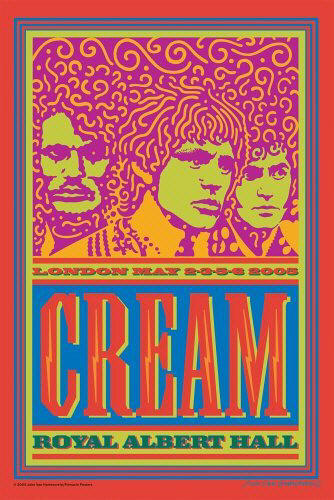
Cream: Royal Albert Hall, May 2005


Carolos Santana was once asked what he played when he practiced. Was it riffs, chords, songs? He replied that he just played one note over and over again until it plugged in to the universe.

That’s what I was thinking on the way in to work this morning with the new Cream album on the car stereo. Cream, the supergroup from the 60s with Eric Clapton, Jack Bruce and Ginger Baker got together again for a series of concerts at Royal Albert Hall in May 2005. The CD and DVD of those concerts was released this past week and I’ve been enjoying them immensely.

To hear Clapton surrounded merely by a bass and drums puts him back in a setting he has not been in for quite some time. Clapton always assembles an outstanding band but he always has keyboards or some other guitarist (or two) to support him. In a power trio like Cream we get to hear what Clapton can do when he’s responsible for filling more of the sonic space again and it is like we really get to hear him play now. And it’s worth it.

While this geriatric version of Cream may not play with the fire that they did in the 60s they really nail a couple of the songs and seem to have replaced the musical excesses they were sometimes guilty of in the old days with a more measured approach to their old songs. Old songs like “Born Under A Bad Sign,” “Politician” and “Sleepy Time Time” get wonderful readings from this batch of geezers that shows that they still understand how to play this type of blues-flavored rock with authority.

But it was a song that I don’t typically associate with Cream that really got to me this morning, the old blues standard “Stormy Monday,” reworked here as a Clapton tour-de-force. Clapton shows on this song that he is a master at this sort of blues interpretation, both as a singer and a guitarist. And for his solo he bends up to a note and hits it something like 20 times – apparently he waited for it to plug into the universe. It did.

Saturday, September 03, 2005

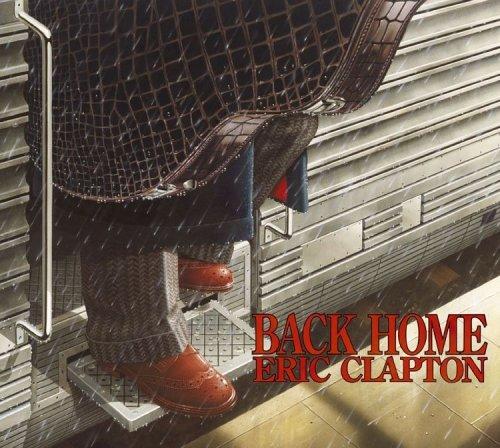
Back Home - Eric Clapton


Eric Clapton’s new album, Back Home, has an interesting story behind it. It seems that Eric knew it was time to make an album and was excited about it but didn’t quite know what he wanted to do so he called his producer and collaborator Simon Climie and said that he wanted to get started. They had a plan, though, that whenever they got stuck they’d record a Robert Johnson song. It seems that the Johnson songs were so easy for the band that they finished a whole album of his music before they finished Eric’s new “regular” album. So, about a year ago, Me and Mr Johnson was released.

Clapton then turned his attention back to the new album and finished it up. With that sort of backstory, one would expect the album to sound a little unfocused, perhaps like there is no real central theme or concept that the artists were going for. It turns out that that’s only partly true because Clapton did, indeed, have a theme in mind. It seems that Eric is a happy guy these days with a wife and three small children and he wanted to write and sing about that. Now in the early 70’s he was completely broken-hearted, using drugs and his life was a mess. He made what is, perhaps the album of his career – Layla and Other Assorted Love Songs. Can a happy Clapton make a great album?

Well, I don’t know if he’ll ever be able to, but he didn’t this time. However, this is a nice album and before I’m accused of damning with faint praise I don’t mean that in a negative way. There are some really nice songs in here and some fine vocal and guitar performances. “Revolution,” the first single is incredibly catchy. I dare you not to sing along the second time you hear it. The guitar solo on the Vince Gill penned “One Day” is amazing and quintessential Clapton. His cover of George Harrison’s “Love Comes To Everyone” is very nicely done, although perhaps too respectful of the original to be necessary. There really isn’t a blues tune in sight although “Lost and Found” comes close.

So this is hardly a barnburner but I keep putting the album on my stereo and I really can’t get some of the songs out of my head. It doesn’t have the passion of Pilgrim or the earthiness of Reptile. In some ways this album is similar to Slowhand which is hardly a great Clapton album but was one of his most commercial successes. If you’re a Clapton fan you might be disappointed with this album but if you’re not, this is one that really might get your attention.

Saturday, December 25, 2004

U2 interview

U2 news article - from @U2

Interesting U2 interview. I love the reason why they didn't sell "Where the Streets Have No Name" for a car ad.

Any Clapton fans should seriously consider getting Sessions for Robert J. I've only watched two-thirds of it but so far it seriously blows Me and Mr Johnson away.